What Are the Advantages of Modular Steel-Structure Schools?
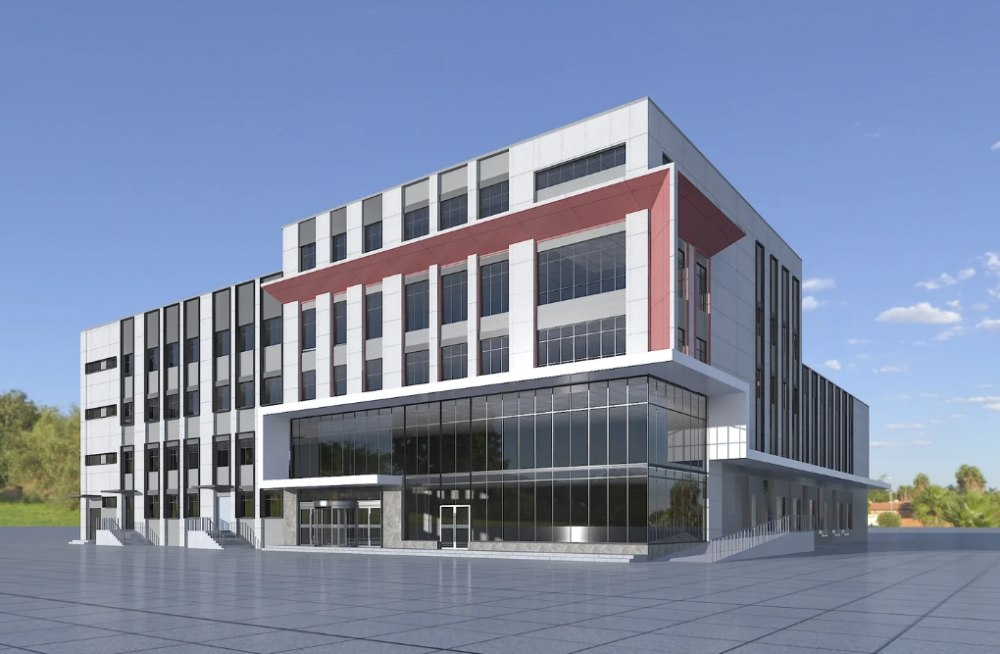
If you have been following school construction projects recently,you will likely have noticed a distinct shift:an increasing number of new or expanding school campuses are now adopting modular steel-structure construction rather than opting for traditional building methods.This trend did not emerge overnight;rather,it has been gaining momentum steadily over the past few years.
According to data from industry research organizations such as McKinsey&Company and the World Green Building Council,the market share of modular construction within the education and public facilities sectors is on a continuous upward trajectory.In some developed nations,this figure has already reached between 15%and 25%—and the numbers continue to rise.
So,why are more and more schools choosing modular steel structures while moving away from traditional construction?What lies behind this shift?In the following sections,we will provide a detailed breakdown of exactly what makes modular steel-structure schools so appealing.
What Is a Modular Steel-Structure School?
Simply put,a modular steel-structure school involves breaking down the"school-building"process into distinct stages,rather than undertaking the entire construction process slowly and exclusively on-site.
The majority of the structural components are fabricated in a factory in advance;by the time they are transported to the construction site,they arrive in a near-finished state.For instance,before a classroom module even leaves the factory,its primary structural framework is largely complete;the walls and insulation layers have been installed,doors and windows are in place,and even portions of the basic plumbing and electrical systems have been pre-embedded.
In other words,what you observe at the construction site is not a process of"building from scratch,"but rather something akin to assembling a giant puzzle.While this approach may sound simple,it is actually underpinned by a comprehensive,standardized production system.
What Are the Core Advantages of Modular Steel-Structure Schools?
To be honest,modular construction is not necessarily the optimal solution for every single project;however,within the specific context of school construction,it offers distinct advantages that make the process run much more smoothly.The benefits outlined below are not merely theoretical concepts;rather,they are tangible advantages that are consistently realized throughout the execution of these projects.
1.Rapid Construction Speed:Often the Deciding Factor
The greatest challenge in school construction projects is rarely the complexity of the design itself,but rather the constraints of time.The start date of the academic year is fixed;once that deadline is missed,it is extremely difficult to rectify the situation.
Traditional school construction cycles typically span more than six months;should delays arise due to adverse weather conditions or on-site construction issues,the timeline can easily stretch to a year or even longer.In contrast,modular projects allow for a significantly compressed overall timeline because many of the construction processes are completed in advance within the factory,enabling on-site assembly and off-site fabrication to proceed simultaneously.Generally speaking,small-scale projects can be completed in approximately 4 to 8 weeks,while medium-scale projects can be delivered in about 2 to 4 months.This disparity becomes particularly evident in real-world projects,especially when approaching the start of a new academic term.
2.Costs are easier to control—less prone to"spiraling upward"
Many people ask:Is modular construction cheaper?Not necessarily;however,it offers a very practical advantage:cost stability.
In traditional construction,budget overruns are actually quite common.Fluctuations in material prices,rising labor costs,and extended construction timelines can all gradually drive costs upward.Modular projects,on the other hand,utilize standardized production processes—combined with centralized factory procurement and shorter construction periods—meaning overall cost fluctuations can typically be kept within a relatively narrow range.
Based on practical experience,cost deviations in modular projects typically hover around±5%,whereas it is not uncommon for traditional projects to exceed their budgets by 10%or even 20%.This factor is crucial for institutions like schools,which often operate under strict budgetary constraints.
3.Expandable space—a benefit that often becomes apparent only later on
Many schools are designed and planned based on their current enrollment figures.The problem,however,is that student populations rarely remain stable over the long term.
Once a traditional building is completed,subsequent expansion can be quite cumbersome;it not only requires obtaining new regulatory approvals but also disrupts normal teaching activities.In contrast,if a modular school is designed with expansion interfaces in mind from the outset,adding new modules later becomes a relatively straightforward process.
We have encountered projects that started with just 10 classrooms and gradually expanded to 20 or more—without the need for demolition and complete reconstruction—simply by seamlessly integrating additional modules.This inherent flexibility becomes increasingly valuable and apparent over the building's long-term operational life.
4.Structural safety is more reliable than you might imagine
Many people initially worry that modular buildings might lack structural integrity.This is,in fact,a very common concern.
However,given current technological advancements,steel-frame structural systems have reached a high level of maturity.Standardized modular steel structures can meet the seismic and wind-resistance requirements of most regions—for instance,withstanding wind forces exceeding Level 10 and meeting all relevant seismic safety codes.
Furthermore,because the components are fabricated in a factory setting,they exhibit higher precision and feature more standardized connection methods.Consequently,in regions with particularly stringent structural requirements,modular buildings are often*easier*to get approved during final inspection.
5.More eco-friendly—and more aligned with modern construction trends
Nowadays,environmental factors are a key consideration in many construction projects—a priority that is particularly pronounced in school-building initiatives.Because a significant portion of the work involved in modular construction is completed in a factory setting,the amount of construction waste generated on-site is significantly reduced—typically by 30%to 60%.Furthermore,material utilization efficiency is higher,and in some cases,specific modules can even be repurposed or reused at a later stage.
A shorter construction cycle also implies a reduced impact on the surrounding environment.For educational campuses,where maintaining a conducive learning atmosphere is paramount,this constitutes a highly practical advantage.
6.Minimal Disruption to Normal Campus Operations
This benefit becomes particularly evident when undertaking expansion projects within an existing campus.
Traditional construction is often accompanied by prolonged periods of noise and operational disruption.In contrast,modular projects require minimal on-site time—since the majority of the work has already been completed in the factory—thereby allowing the impact on teaching and learning activities to be kept within a relatively narrow and manageable scope.
Some projects have even been successfully executed during the academic semester,with the overall disruption proving far less significant than one might initially anticipate.
Modular Schools vs.Traditional Schools:What Are the Practical Differences?
Viewed purely from a conceptual standpoint,the distinctions between modular and traditional schools might appear somewhat abstract.However,from a different perspective,they can be understood as two fundamentally distinct construction methodologies:one involves building step-by-step directly on-site,while the other entails pre-fabricating components off-site and subsequently assembling them.
In actual projects,these differences become quite noticeable.They usually show up in areas like timelines,overall costs,how easy it is to expand,and even how the construction process is managed.
To make things easier to understand,here’s a simple side-by-side comparison:
Comparison Criteria | Modular Steel-Structure Schools | Traditional Construction |
Construction Cycle | 1–4 Months | 6–12 Months+ |
Cost Control | Relatively Stable | Subject to Significant Fluctuations |
Scalability | Flexible | Relatively Difficult |
Environmental Friendliness | High | Average |
Construction Impact | Minimal | Significant |
Of course,this serves merely as a general reference.In real-world projects,these disparities often become even more pronounced—particularly regarding construction timelines and future expansion capabilities—due to factors such as the specific site environment and project scale.
Conclusion
Revisiting our initial inquiry—what exactly are the benefits of modular steel-structure schools?—the answer can be distilled into three key concepts:faster,more flexible,and more controllable.
However,the true significance lies not merely in these specific advantages,but rather in the fact that this approach introduces an entirely new paradigm for construction.In contrast to the traditional method of"building from the ground up,"modular construction resembles the process of assembling a complete,functional space using pre-fabricated,standardized units.
While this approach may have historically been regarded as a supplementary alternative,it is now rapidly emerging as a mainstream choice within the construction landscape.
FAQ Regarding Modular Steel-Structure Schools
Are modular steel-structure schools merely temporary structures?
No.Modular steel-structure schools can serve as temporary facilities,but they can just as effectively function as permanent,long-term school buildings.Since the service life of steel-structure schools typically exceeds 10 years—and given that many countries have already integrated modular steel-structure schools into their standard building codes—they are not considered equivalent to temporary structures.
How is the comfort level in modular schools?
With proper design,the comfort level can closely rival that of traditional school buildings.The key to comfort lies not in the construction method itself,but rather in the specific features and configurations—such as natural lighting,ventilation,and thermal insulation.If these elements are implemented effectively,the classroom environment can actually be quite comfortable.
In fact,some projects even offer superior natural lighting and ventilation compared to traditional classrooms.
Do modular steel-structure schools get very hot in the summer?
If proper thermal insulation and heat-blocking measures are implemented during construction,the buildings will not become excessively hot in the summer.Rock wool or polyurethane insulation layers can be added to the walls;when combined with effective shading and ventilation designs,this significantly reduces heat penetration.Furthermore,with the addition of an air conditioning system,the overall indoor comfort level is largely indistinguishable from that of a standard school building.
Can modular schools be expanded later on?
Yes,and the expansion process is relatively simple.If connection points were reserved during the initial planning phase,subsequent expansion merely requires adding new modules and connecting them to the existing structure—without the need for extensive demolition or structural modifications to the original building.This approach is particularly practical and cost-effective for schools experiencing rapid fluctuations in student enrollment.
Do modular steel-structure schools comply with building codes?
Yes,provided they are designed and constructed in strict accordance with applicable regulations.Structural safety,fire protection,and electrical systems must all meet local standards.Most regions today have established mature and streamlined approval processes for such projects.
Which types of schools are best suited for modular construction?
Modular construction is ideal for projects that prioritize"speed"and"flexibility."It is particularly well-suited for scenarios such as sudden increases in student enrollment requiring rapid expansion,the establishment of temporary transitional campuses,construction in remote regions,or post-disaster reconstruction efforts.Whenever a project faces tight deadlines or an accelerated timeline,modular construction often offers distinct advantages.