How Much Does It Cost to Build a Steel-Structure Cold Storage
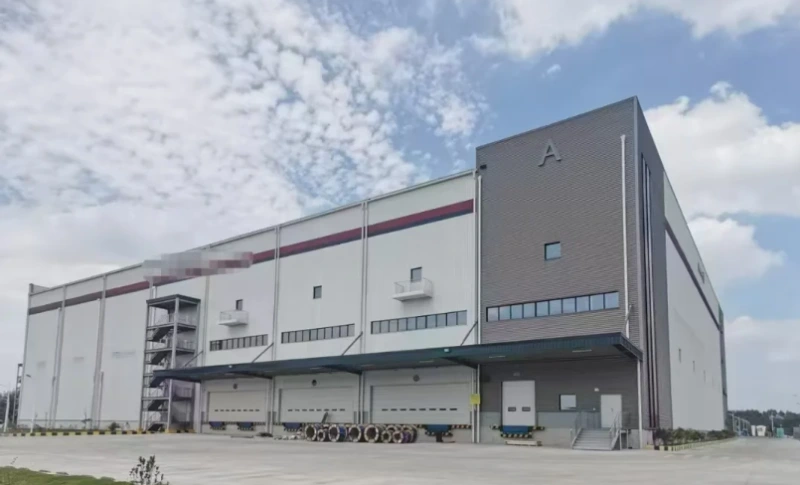
Internationally,the construction cost for a steel-structure cold storage typically ranges from$140 to$300 per square meter,depending on the required temperature range,insulation system,and refrigeration configuration.For a standard 1,000-square-meter cold storage project,the total investment would generally fall between$140,000 and$300,000.
If you require a facility designed for deep freezing(below-18°C)or pharmaceutical-grade storage,the costs may be higher—potentially even exceeding$350,000.
Why is building a steel-structure cold storage facility so expensive?Where exactly does the money go?The following section provides a detailed breakdown.
Overall Cost Ranges for Steel-Structure Cold Storage
Steel-structure cold storage facilities typically do not have a single fixed price;instead,costs are categorized into several distinct ranges based on temperature requirements,system configurations,and intended use.
Broadly speaking,construction costs for cold storage facilities generally fall within the range of$140 to over$300 per square meter.The specific range applicable to a project depends primarily on the required temperature specifications and the complexity of the refrigeration system.
Refrigerated Storage Facilities(0°C to 5°C)
The construction cost for a refrigerated steel-structure facility ranges from approximately$140 to$210 per square meter.
Refrigerated storage facilities are generally considered the"basic configuration"within the cold chain ecosystem.Rather than aiming for extreme sub-zero temperatures,they focus on maintaining a stable,temperature-controlled environment to keep products fresh during transit or storage.
In practical applications,these facilities are most commonly found in settings such as fruit and vegetable wholesale markets,dairy product warehouses,and beverage distribution centers.Their operational logic centers more on"extending shelf life"than on long-term deep freezing.
From an engineering perspective,the systems required for this type of facility are relatively simple.The operational load on the refrigeration equipment is lower,and the insulation layers do not need to be excessively thick;consequently,the overall construction costs remain relatively manageable.Furthermore,due to the smaller range of temperature fluctuation,energy consumption is more economical.
Overall,this type of facility is best suited for projects with limited budgets that nonetheless require basic cold chain capabilities,representing a typical"entry-level cold chain solution."
Freezer Cold Storage(-18°C)
The construction cost for a steel-structure freezer cold storage facility is approximately$180–$280 per square meter.
Freezer cold storage is currently the most widely utilized type globally,meeting almost all mainstream requirements within the food cold chain.
It is primarily used for the long-term storage of meat,poultry,aquatic products,and quick-frozen foods,playing a critical role in the cold chain supply network.Compared to refrigerated storage facilities,it demands not only lower temperatures but also a more robust and stable capacity for continuous operation.
From an engineering design perspective,the complexity of this type of cold storage increases significantly.To ensure the long-term stability of the low-temperature environment,higher-capacity refrigeration units are typically required.Furthermore,the building envelope—the structural enclosure—must meet more stringent standards;this includes thicker insulation layers,stricter airtightness specifications,and structural optimizations designed to prevent thermal bridging.
These additional technical requirements are directly reflected in the overall investment cost,making it notably higher than that of standard refrigerated storage facilities.However,this capability also enables support for a broader range of commercial cold chain operational models,which is why this category holds the largest market share.
Ultra-Low Temperature Cold Storage(-40°C and Below)
The construction cost for a steel-structure ultra-low temperature cold storage facility is approximately$280–$300+per square meter.
Ultra-low temperature cold storage facilities are classified as high-end cold chain infrastructure,typically serving industries where temperature sensitivity is critical—such as pharmaceuticals,biotechnology,and advanced scientific research.
In these application scenarios,the cold storage facility functions as far more than just a storage space;it acts as a sophisticated"environmental control system."It is required to maintain extremely low and stable temperature conditions over extended periods to ensure the safety,integrity,and biological activity of the stored products or samples.
Given the extremely low temperature requirements,the system design is inherently more complex.Multi-stage refrigeration architectures are typically employed to ensure stable operation even under extreme environmental conditions.Concurrently,the thermal insulation structure and sealing performance are significantly enhanced to minimize energy loss.
Furthermore,these facilities incorporate rigorous redundancy designs to mitigate risks associated with equipment failure or external environmental fluctuations.Consequently,in terms of both construction costs and technical barriers to entry,these facilities stand significantly higher than standard cold chain infrastructure.
To provide a more intuitive understanding of the investment differences between various types of cold storage facilities,let us break down the costs using a standard 1,000 m²cold storage project as an example:
Cold Storage Type Unit Price(USD/m²)Total Cost Range(USD)
Refrigerated Storage(0°C–5°C)140–210 140,000–210,000
Frozen Storage(-18°C)180–280 180,000–280,000
Ultra-Low Temperature Storage(-40°C)280–300+280,000–300,000+
It is important to note that the costs cited here typically refer to the combined engineering expenses for the cold storage facility's main structure,insulation system,refrigeration system,and basic installation.
What exactly constitutes the cost structure of a steel-framed cold storage facility?
When encountering a cold storage project for the first time,many people instinctively assume that the majority of the cost stems from the"steel structure itself."However,in actual engineering practice,this is a fairly common misconception.
If we deconstruct a cold storage facility,it is best viewed as an integrated engineering project comprising multiple interconnected systems,rather than merely a standalone architectural structure.The primary factors that truly influence the price are often not the steel materials themselves,but rather those unseen components—the operational systems that run continuously in the background.
1.Main Steel Structure(20%–30%)
The steel structure component serves as the"skeleton"of the cold storage facility,responsible for bearing the load and ensuring the overall stability of the building.
It primarily consists of the main structural framework,the roofing system,and the wall support structures.Additionally,it undergoes anti-corrosion surface treatment to ensure suitability for use in various environmental conditions.
From a cost perspective,this component does not differ significantly from that of a standard industrial warehouse.In other words,if one were to look solely at the steel structure itself,it would not be the primary source of cost variation among different types of cold storage facilities.
2.Insulation System(25%–40%)
If the steel structure acts as the skeleton,then the insulation system serves as the true"functional core"of the cold storage facility.This section directly determines whether the cold storage facility can stably maintain a low-temperature environment.It typically encompasses critical structural components such as polyurethane(PU)insulation panels,an integral airtight structural design,thermal bridge prevention measures,and a floor anti-freeze layer.
In actual projects,cost variations are often most evident in this area.Differences in the thickness and density of insulation materials,as well as construction techniques,can have a significant impact on the overall project cost.
Furthermore,the quality of the insulation system's design directly influences the facility's long-term energy consumption performance.
3.Refrigeration System(25%–40%)
The refrigeration system is typically the most technologically sophisticated component of the entire cold storage facility,and it is also the area subject to the greatest cost fluctuations.
It comprises core equipment such as compressor units,air coolers,refrigeration piping networks,and temperature control systems.
In practical operation,this section determines the cold storage facility's ability to consistently maintain its set temperature over the long term.The price disparity between equipment from different brands or with varying energy efficiency ratings can be substantial.
Consequently,in many projects,the specification level of the refrigeration system virtually dictates the upper limit of the entire cold storage facility's investment cost.
4.Electrical and Installation Systems(10%–15%)
In addition to its structural and refrigeration components,a cold storage facility relies on a comprehensive suite of electrical and control systems to ensure stable operation.
This section typically encompasses automated control systems,temperature monitoring systems,electrical power distribution infrastructure,as well as on-site installation and commissioning work.
Although it accounts for a relatively small proportion of the overall cost,it serves as the"final link"—the critical element that guarantees the proper functioning of the cold storage facility.If the control system is unstable,even the highest-quality front-end equipment cannot guarantee effective overall performance.
Key Factors Influencing Cold Storage Costs
The construction cost of a cold storage facility is not a fixed figure;rather,it is the result of the cumulative interaction of multiple variables.For two cold storage facilities of the exact same size—say,1,000 square meters—differing design specifications can result in final price quotes that vary by as much as 30%or even more.
In the context of actual engineering procurement,the factors that truly account for price disparities are typically the following core elements:
1.Temperature Requirements
The required temperature level is arguably the primary factor determining the cost of a cold storage facility.The lower the required temperature,the greater the energy consumption and equipment specifications required for the system,leading to a corresponding increase in overall complexity.0°C Refrigeration:The structural and refrigeration requirements are relatively simple,resulting in the lowest cost.
-18°C Freezing:Requires a more robust refrigeration system and thicker insulation layers,leading to a significant increase in cost.
-40°C Ultra-Low Temperature:Involves multi-stage refrigeration and high-standard insulation design,resulting in a substantial increase in cost.
Simply put,for every drop in temperature by one tier,the system undergoes a corresponding"upgrade,"causing the cost to jump accordingly.
2.Project Scale
Cold storage projects exhibit very distinct economies of scale.
Small-scale Cold Storage(<500 m²):Unit costs are higher because fixed equipment accounts for a larger proportion of the total investment.
Medium-scale Cold Storage(1,000–3,000 m²):Offers the best balance between design and construction,resulting in relatively reasonable unit costs.
Large-scale Cold Chain Centers(>5,000 m²):Economies of scale become evident,leading to a decrease in unit costs.
In other words,the larger the floor area,the lower the average unit price tends to be;however,the total investment will be higher.
3.Industry Sector and Standard Grade
Different application scenarios impose vastly different technical requirements on cold storage facilities,which directly impacts construction costs.
Food Cold Storage:Features standardized configurations,resulting in relatively stable costs.
Pharmaceutical Cold Storage:Demands higher precision in temperature control and incorporates more system redundancy in its design.
Biological and Scientific Research Cold Storage:Requires extremely high stability,adhering to much stricter design standards.
The more specialized or high-end the industry sector,the more stringent the requirements become for equipment,control systems,and safety standards—naturally driving up costs.
4.Regional Differences and Construction Models
For the exact same project,the cost structure will vary depending on the region in which it is constructed.
China-based EPC Export Model:Benefits from a mature supply chain,resulting in lower overall costs.
Local Construction(Europe/North America):Incurs higher labor and material costs.
Transnational Projects:Require additional consideration for transportation,customs duties,and on-site installation conditions.
Particularly for overseas projects,construction conditions and logistics costs often emerge as significant variables that cannot be overlooked.
5.Adoption of an Integrated EPC Model
The project delivery model also plays a role in shaping the overall cost structure.
Material Procurement Only:Offers a lower initial quoted price but requires the client to independently coordinate the construction process.
EPC General Contracting:Involves a higher overall cost but provides unified management of design,procurement,and construction.
The advantage of the EPC model lies in its lower risk profile and greater system stability,though the price tag typically reflects this comprehensive,"all-inclusive"scope.
Cold Storage Facilities vs.Standard Steel-Structure Warehouses
If viewed solely from the perspective of"building structure,"there is actually very little difference between a cold storage facility and a standard steel-structure warehouse;in fact,regarding the primary steel structure itself,their cost structures are remarkably similar.
However,once the functional systems are incorporated,a distinct divergence emerges in the overall investment required for the two types of facilities.
In the international engineering market,a typical comparison looks like this:
Type Cost(USD/㎡)
Standard Steel-Structure Warehouse 40–100
Steel-Structure Cold Storage 140–300+
From this range,you can intuitively see that the overall construction cost of a cold storage facility is typically 2 to 4 times that of a standard warehouse.
Moreover,this cost disparity is not caused by merely"adding an extra structural layer,"but rather by the comprehensive suite of environmental control systems required.
Why Are Cold Storage Costs Higher Than Those of Standard Warehouses?
Many people,upon their first encounter with a cold storage project,have a very intuitive question:"It’s just a matter of lowering the temperature—why is the cost so much higher?"
If we break this down using engineering logic,the answer is actually quite simple.The reason cold storage facilities are expensive is not because their"construction is more complex,"but because,fundamentally,they are not merely standard buildings;rather,they are environmental control systems designed for continuous,long-term operation.
It Is Not Just a Building;It Is a"Systems Engineering"Project
The logic behind a standard steel-structure warehouse is straightforward:essentially,it provides a stable and secure space for storage.Once the structural framework is erected,its functional purpose is largely established.
Cold storage facilities,however,are entirely different.They must not only"provide space"but—more importantly—"create an environment."This environment must be maintained within a stable,low-temperature range over the long term,without experiencing significant fluctuations.
Consequently,a cold storage facility is effectively the result of multiple systems working in concert—including temperature control systems,high-airtightness enclosure structures,continuous refrigeration systems,and energy management systems.These components do not exist in isolation;rather,they collaborate to collectively maintain a sealed,low-temperature environment.
In other words,a cold storage facility is not a case of"build it and it's done";rather,it is a case of"build it,and that is when its true operation actually begins."
Costs Lie Not Only in Construction,But Also in Continuous Operation
The cost structure of a standard warehouse is typically one-off,with the majority of the investment concentrated during the construction phase.Once the facility is handed over,subsequent operating costs remain relatively stable,focusing primarily on maintenance and management.However,the economics of a cold storage facility are entirely different;its true costs do not cease upon completion but rather transition into a phase of continuous,long-term expenditure.
A cold storage facility requires its refrigeration system to operate continuously—24 hours a day—to maintain internal temperature stability.This implies that energy consumption is a constant occurrence and often constitutes one of the largest expenditure categories over the entire lifecycle of the project.
Consequently,when evaluating a cold storage project,focusing solely on initial construction costs makes it all too easy to underestimate the total investment required.A truly comprehensive cost model must account for both construction costs and long-term operational expenses.
Temperature Precision Requirements Far Exceed Those of Standard Buildings
Standard steel-structure warehouses typically impose few strict requirements regarding temperature fluctuations;even if some variation occurs,it rarely compromises their functional utility.
Cold storage facilities,conversely,demand an exceptionally high degree of temperature stability—often requiring precision within a very narrow margin of fluctuation.
In many practical applications,even a temperature shift of just 1–2°C can have significant repercussions.For instance,stored food products may suffer a decline in quality;pharmaceutical products may face the risk of rendering ineffective;and the viability of certain biological samples could be compromised.
It is precisely because of this"reliance on stability"that cold storage projects necessitate the implementation of more sophisticated control systems and adherence to more rigorous engineering standards during the design and construction phases—factors that inevitably drive up the overall cost structure.
How to Optimize Cold Storage Construction Costs?
From an investment perspective,the costs associated with cold storage facilities are not inherently"fixed and uncontrollable."Many projects end up exceeding their budgets not because the necessary technology is unavailable,but because critical variables were not adequately analyzed during the preliminary planning phase.
By making more prudent decisions during the design and procurement stages,it is entirely possible to keep the overall investment within a more financially sustainable range without compromising operational effectiveness.
1.Select the Appropriate Temperature Grade
A common pitfall in many cold storage projects is"overly conservative temperature design."This refers to instances where a lower temperature grade—such as-18°C or even-40°C—is selected by default,despite the actual operational requirements calling for only standard refrigerated conditions(around 0°C).
This form of"over-specification"in the design phase directly inflates the costs associated with the refrigeration system,thermal insulation structures,and long-term energy consumption.
Therefore,the most critical step during the initial phase of a project is not to simply select the most technologically advanced solution,but rather to first clearly define the actual storage requirements.With every incremental decrease in temperature,both system complexity and cost rise significantly.
2.Optimizing Space Design
The spatial design of a cold storage facility often has a far greater impact on costs than many people realize.A poorly structured layout not only results in wasted floor area but also drives up long-term operational expenses.
In actual projects,optimizing shelving layouts,minimizing unproductive aisle space,and maximizing spatial utilization can effectively boost overall storage capacity without the need to expand the building's physical footprint.
Furthermore,designing an efficient flow of logistics is critical;it not only influences operational efficiency but also indirectly affects the load distribution of the refrigeration system,thereby impacting energy consumption performance.
3.Selecting the Appropriate Refrigeration System
The refrigeration system typically accounts for one of the largest portions of a cold storage facility's total cost;however,this does not imply that"the more expensive,the better."
In practical engineering applications,the critical factor is"matching the specific usage scenario."Different types of stored goods impose varying requirements regarding temperature stability,operational frequency,and energy consumption.
If the system is over-specified,it results in unnecessary capital waste;conversely,if it is under-specified,it may compromise long-term operational stability.Therefore,an optimal solution strikes a balance between performance and cost,rather than merely pursuing high-end specifications.
4.EPC Integration vs.Subcontracting Models:A Comparison
In cold storage projects,the choice of construction model directly impacts the overall cost structure.
Some projects opt to separate design,procurement,and construction into distinct phases.While this approach may appear more flexible on the surface,in practice,it often leads to increased coordination costs,communication overhead,and scheduling risks.
In contrast,although the EPC(Engineering,Procurement,and Construction)integrated model may appear to have higher unit costs initially,the fact that the entire system is centrally managed by a single team results in greater efficiency regarding design integration,equipment compatibility,and on-site coordination—thereby lowering overall project risk.
Consequently,from a total cost perspective,the EPC model often proves to be the more economically viable option in many scenarios.
Summary
Fundamentally,the cost of a steel-structure cold storage facility is not merely a fixed construction quote;rather,it represents a systemic investment determined by a combination of factors:temperature classification,the refrigeration system,the thermal insulation structure,and long-term energy consumption.Overall,construction costs for cold storage facilities in the international market typically range from$140 to over$300 per square meter.For a 1,000-square-meter project,the total investment would generally fall between$140,000 and upwards of$300,000,depending on the specific cold chain classification and configuration standards.
Structurally speaking,the steel framework serves merely as the basic skeleton of the cold storage facility;the true differentiator in cost lies in the comprehensive engineering systems built around the core objective of"temperature stability"—specifically,the refrigeration equipment,insulation systems,and electrical controls.It is precisely at the level of these specialized systems that the distinction between a cold storage facility and a standard steel-structure warehouse becomes most pronounced.
Therefore,from an investment perspective,building a cold storage facility is not simply about"constructing a building,"but rather about"engineering a low-temperature environment system capable of stable,long-term operation."Success lies with those who can most effectively align the system with specific temperature requirements,optimize configurations,and manage energy consumption—thereby achieving the optimal balance between cost efficiency and operational performance.