What Are the Advantages of Steel Structure Buildings
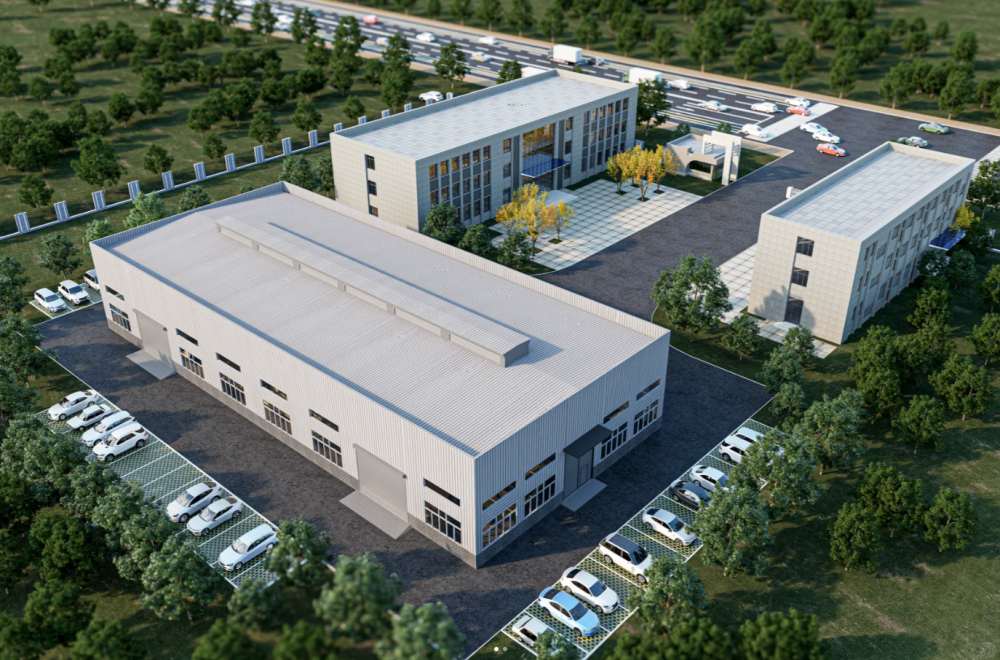
For a long time,brick and concrete structures were almost the default understanding of"buildings."Houses,factories,warehouses,and commercial buildings mostly relied on on-site pouring,resulting in long construction periods,but were considered"safe and reliable."
However,with the continuous improvement of construction efficiency,environmental standards,and space utilization requirements,the limitations of traditional construction methods have gradually become apparent,and steel structure buildings have begun to appear frequently in various projects.
So,what exactly are the advantages of steel structure buildings?How do they compare to traditional buildings?Are they truly suitable to become an important direction for future construction?To answer these questions,we must return to the actual use and engineering logic itself.
1.From the structural essence:Differences between steel structures and traditional buildings
From the perspective of material properties,the core difference between steel structures and traditional buildings lies primarily in the strength-to-weight ratio.
According to public data from the World Steel Association:
The yield strength of structural steel is usually 235–355 MPa
The compressive strength of ordinary concrete is mostly concentrated at 20–40 MPa
This means that,under the premise of bearing the same load,steel structures require smaller component cross-sections,and the overall weight of the structure can be reduced by 30%–50%.
The reduction in self-weight is not just about"saving materials,"but directly affects the foundation size,foundation cost,and subsequent settlement risks.
For high-rise buildings or large-span structures,every 10%reduction in self-weight can significantly reduce the complexity of foundation engineering,which is an important reason why steel structures are more advantageous in large-scale projects.
2.Comparison of construction methods:The essential difference in efficiency
Construction efficiency is one of the most easily perceived advantages of steel structures.
According to statistics on prefabricated buildings released by the China Construction Industry Association,under the same building area conditions:
The main construction period of steel structure buildings is usually 30%–50%shorter than traditional cast-in-place concrete buildings.
In some standardized factory projects,the construction period reduction can even reach 60%.
The fundamental reason for this difference lies in the different construction methods.
Traditional construction relies heavily on on-site work,with many processes,complex interdependencies,and significant susceptibility to weather conditions.A large portion of the work on steel-framed buildings is completed in the factory,with on-site work primarily involving lifting and connecting components,making the construction process more controllable.
For commercial buildings,shorter construction periods don't just mean"saving time,"but also mean earlier operation and faster return on investment.In the commercial real estate sector,this time value can often offset or even exceed the difference in material costs.
3.Space Utilization:Steel Structures"Know How to Give Up Space"
In practical use,the value of a building is often reflected in"how much freely usable space there is."
Traditional reinforced concrete structures are limited by span,and the internal column grid is usually quite dense.Taking a common industrial factory building as an example:
The economical span of concrete structures is mostly 6–9 meters.
The common span of steel-framed factory buildings can reach 18–36 meters,or even larger.
The increased span directly reduces the number of internal columns.According to engineering experience,under the same building area,steel structures can increase the effective usable area by 5%–10%.
For functional buildings such as warehouses,logistics centers,and exhibition halls,this increase in space often means higher operational efficiency.
4.Seismic Performance:The Material Logic Behind Safety
In seismic design,"strength"is not the only indicator;"ductility"is equally crucial.
According to structural engineering research data from the American Society of Civil Engineers(ASCE):
Steel can maintain significant deformation capacity even after entering the yield stage.
The load-bearing capacity of concrete structures decreases more rapidly after tensile failure.
Under seismic action,steel structures can absorb energy through structural deformation instead of sudden fracture.This is why in high-intensity seismic zones,high-rise buildings and important public facilities tend to use steel structures or steel-concrete composite structures.
From a safety perspective,this"controllable deformation"characteristic provides valuable time for personnel evacuation.
5.Environmental Protection and Sustainability:Advantages Throughout the Entire Life Cycle,from Construction to Demolition
Against the backdrop of"dual carbon"goals,the environmental attributes of the construction industry are receiving increasing attention.
According to statistics from international building research institutions:
The recycling rate of construction waste after the demolition of traditional buildings is usually less than 30%.
The recycling rate of steel in steel-framed buildings can reach over 90%.
In addition,due to the reduction of wet work on steel structure construction sites,dust and construction waste emissions are significantly reduced.Some studies show that in projects of the same scale,the amount of construction waste generated during the construction phase of steel structures can be reduced by 20%–40%.
These data illustrate that the environmental advantages of steel structures are not only reflected in the materials themselves,but also throughout the entire"construction-use-demolition"process.
6.Flexibility and Scalability:Stronger Adaptability to Change
In actual projects,the frequency of changes in building functions is increasing.Upgrading industrial plants and renovating commercial spaces have become commonplace.
Engineering practice shows that:
The renovation cycle of steel structures is usually 25%–40%shorter than that of traditional buildings.
Later additions or expansions have less impact on the original structure.
This flexibility makes steel structures more valuable in the long term for industrial parks,logistics centers,and commercial complexes.
7.Cost Issues:Don't Just Look at"Construction Cost"
From the perspective of initial construction costs,steel structures are indeed slightly more expensive than traditional buildings in some projects.However,if time,maintenance,and renovation costs are taken into account,the conclusion is often different.
Industry calculations show that:
Steel structures can reduce life-cycle costs by 10%–20%compared to traditional buildings.
The advantages are even more obvious in projects with tight deadlines and frequent later adjustments.
This is why more and more investors are starting to focus on"total cost"rather than just the initial construction cost.
8.Rationally Viewing Limitations:Steel Structures Are Not a Panacea
Of course,steel structures are not without requirements.They have higher standards for fire protection and corrosion prevention,and require higher levels of professionalism in design and construction.
However,these are not shortcomings,but rather requirements for standards and technology.As long as these factors are fully considered in the design and construction phases,steel structures can fully meet or even exceed the safety and durability levels of traditional buildings.
Conclusion
Overall,steel structures demonstrate significant advantages over traditional buildings in terms of structural performance,construction efficiency,space utilization,seismic resistance,environmental attributes,and flexibility.
As the construction industry moves towards industrialization,standardization,and sustainability,steel structures are no longer just an"alternative solution,"but are becoming the preferred choice for more and more projects.
For builders who pursue efficiency,quality,and long-term value,steel structures are redefining the possibilities of modern architecture.