How Many Years Can A Steel Structure Warehouse Be Used
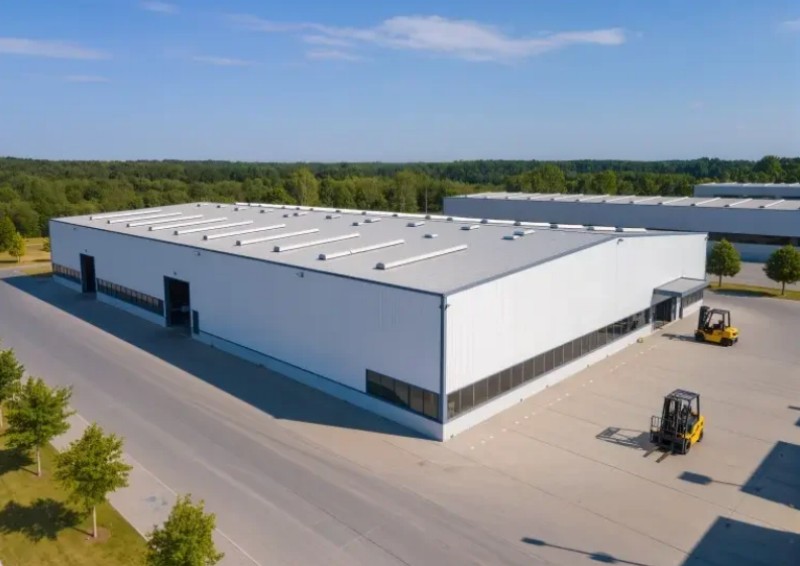
The typical lifespan of a steel structure warehouse is between 20 and 50 years.This range depends on material quality,design standards,construction techniques,and daily maintenance.High-quality steel structure warehouses,using high-quality steel and undergoing anti-corrosion treatment and proper maintenance,can even last for more than 50 years.
Compared to traditional brick and concrete warehouses,steel structure warehouses not only have a more flexible lifespan but also offer higher structural safety and space utilization under the same conditions.
Understanding this lifespan range,you will find that a steel structure warehouse is not just a building choice,but also an investment decision.Its long-term value is reflected not only in cost savings but also in construction flexibility,controllable space,and ease of maintenance–advantages that traditional warehouses cannot match.
Typical Lifespan of Steel Structure Warehouses
In practical applications,the lifespan of a steel structure warehouse is mainly affected by materials,construction,and the environment.Generally speaking:
Standard warehouses:If ordinary steel,basic anti-corrosion treatment,and standard construction methods are used,the lifespan of a warehouse is typically 20–30 years,suitable for general warehousing or light industrial use.
Mid-to-high-end warehouses:Using high-quality steel,hot-dip galvanizing for corrosion protection,and professional design and construction,the lifespan can be extended to 30–40 years.These warehouses are often used for logistics,cold chain storage,or long-term industrial production.
High-specification custom warehouses:Using high-strength steel,advanced coating for corrosion protection,managed by a professional construction team,and combined with regular maintenance,the service life can exceed 50 years,even becoming a long-term asset for the enterprise.
The lifespan of a steel structure warehouse can be compared to that of a car:a standard steel warehouse is like a regular car,requiring routine maintenance,while a high-quality warehouse is similar to a high-end luxury car,and with proper maintenance,its service life can be significantly extended.
Service Life of Different Types of Steel Structure Warehouses
The lifespan of steel structure warehouses varies depending on their purpose:
Standard industrial warehouses:Lifespan of approximately 20–35 years,suitable for light industry and general warehousing.
Cold storage steel structure warehouses:Greatly affected by low temperature and humidity,requiring high-specification anti-corrosion and insulation treatment,with a lifespan of 30–40 years.
Temporary or movable steel structure warehouses:Relatively shorter lifespan,generally 15–25 years,but quick to construct and relocatable,suitable for short-term projects or mobile businesses.
The comparison shows that the service life is closely related to construction standards,material quality,and intended use.Before choosing,these factors need to be considered comprehensively to maximize cost-effectiveness.
How to extend the lifespan of steel structure warehouses
The key to extending the lifespan of steel structure warehouses lies in materials,design,maintenance,and environmental protection.Through scientific methods and systematic management,you can significantly delay steel corrosion,reduce structural fatigue,and thus make the warehouse safer,more durable,and longer-lasting.
1.Use high-quality materials
Choosing high-strength steel is the first step in ensuring the durability of the warehouse.For example,Q345 steel has better tensile strength and toughness than ordinary steel,and can withstand greater wind pressure and snow loads.In addition,the thickness and type of anti-corrosion coating are also crucial.
Hot-dip galvanized steel or epoxy resin coatings not only have strong rust resistance but also can resist the erosion of acid rain,salt spray,and other harsh environments.In addition,when constructing a warehouse,choosing weather-resistant roofing and wall materials such as colored steel plates and sandwich panels with appropriate thickness can also play a role in resisting external forces such as wind,rain,solar ultraviolet radiation,and snow load,providing secondary protection for the steel structure.
2.Rational Structural Design
The lifespan of a warehouse depends not only on the materials but also on scientific design.Roof slope,drainage system,beam and column layout,and purlin spacing all affect the durability of the warehouse.A roof slope that is too small can easily lead to water accumulation,causing the roof panels and steel to become damp and rust;unreasonable beam and column spacing can easily cause stress concentration,accelerating structural fatigue.
In the design,optimization can be carried out in combination with local climate and environmental conditions.For example,in areas with heavy rainfall,it is recommended that the roof slope be greater than 5°,and an effective drainage system should be installed;in areas with strong winds,reasonable wind-resistant supports and shear walls should be designed to avoid structural deformation or damage.
You can compare structural design to the joints and muscles of the human body:with a reasonable design and even stress distribution,it is less likely to be damaged;with an improper design,even if the bones are strong,problems may still arise due to localized stress concentration.
3.Regular Maintenance
Maintenance is the most economical way to extend the lifespan of a steel structure warehouse.Even with the best steel,neglecting daily inspections for a long time can lead to problems such as loose bolts,weld cracks,roof leaks,or peeling of the anti-corrosion coating.
It is recommended to conduct a comprehensive inspection annually and a partial inspection quarterly.Inspection items include:
Whether bolts and nuts are loose
Whether welds and steel beams have cracks or corrosion
Whether the roof waterproofing layer and wall coating are intact
Whether drainage ditches and downpipes are blocked
Promptly addressing any problems,such as repainting,waterproofing repairs,and bolt reinforcement,can significantly extend the service life of the warehouse.Maintenance is not only about repairing problems,but also a preventative management method.It can be compared to car maintenance:timely maintenance,oil changes,and brake checks are more economical and safer than repairing after a breakdown.
4.Environmental Protection and Local Protection
Environmental factors have a significant impact on steel structures,especially in coastal,humid,or heavily polluted industrial areas.Salt spray,humidity,and acid rain can accelerate steel corrosion.Without protective measures,the lifespan of a warehouse may be shortened by 5–10 years or even more.
In this case,environmental risks can be reduced through the following methods:
Applying localized anti-corrosion treatment to steel structures,such as thickening the coating or applying epoxy paint.
Installing protective sheds or awnings to reduce direct erosion from rain and ultraviolet rays.
Using insulating materials to protect steel in contact with the ground to prevent bottom rust.
In addition,if the warehouse stores easily corrosive or high-humidity items,it is recommended to install ventilation and dehumidification equipment to keep the interior dry,thereby reducing the risk of steel corrosion due to moisture.
Through environmental protection,you can extend the lifespan of your warehouse by several years or even decades,while reducing maintenance frequency and costs.
5.Develop a maintenance plan based on usage needs
Different types of steel structure warehouses have different operating environments,such as cold storage,logistics warehouses,or industrial plants.Developing a targeted maintenance plan based on actual use can maximize the service life.
Logistics warehouses:Focus on roof drainage,door and window sealing,and ground drainage.
Industrial plants:Focus on the impact of high temperature,dust,and chemical corrosion on steel.
Cold storage steel structures:Focus on checking the insulation layer,waterproof layer,and internal humidity control.
A scientific maintenance plan should not only include a schedule but also inspection content and responsibility assignments to ensure that problems are discovered and addressed promptly.
Suggestions for choosing a steel structure warehouse
When choosing a steel structure warehouse,you need to carefully select,as this will directly affect the lifespan of your warehouse.
Clarify the purpose:Choose a steel structure warehouse with suitable specifications and strength based on storage,industrial production,or cold chain needs.
Pay attention to supplier qualifications:Choose manufacturers with rich experience and standardized construction to ensure the quality of materials and construction.
Consider budget and lifespan comprehensively:Don't just look at the initial investment cost,but also consider the overall cost-effectiveness of long-term maintenance and service life.
Plan a maintenance program:Developing a daily inspection and maintenance plan in advance can effectively extend the lifespan of the warehouse.
FAQs about Steel Structure Warehouse
What are steel structure warehouses suitable for?
Steel structure warehouses are suitable for various applications,including logistics and warehousing,industrial plants,agricultural storage,and cold chain storage.Different uses have different requirements for roof height,span,insulation,and waterproofing,which need to be planned in advance during the design phase to meet actual usage needs.
What are the wind and seismic resistance capabilities of steel structure warehouses?
Steel structures are lightweight,high-strength,and have uniform stress distribution,offering superior bending and compression resistance compared to traditional brick and concrete warehouses.Typically,standard steel structure warehouses can be designed to withstand maximum wind speeds of 45–50 m/s(approximately Beaufort scale 8–10)and seismic intensity of around 7 degrees.For areas with strong winds or frequent earthquakes,you can further enhance the safety and stability of the warehouse by using thicker steel,adding support beams and columns,or employing wind-resistant support systems.
How long does it generally take to build a steel structure warehouse?
Steel structure warehouses have a short construction period,usually taking only a few weeks to two or three months to complete the main structure.Compared to brick and concrete structures,they can be quickly expanded or modified,making them suitable for projects that require rapid deployment.
Are steel structure warehouses expensive to build?
The initial investment is slightly higher than that of ordinary simple sheds,but steel structures are durable,quick to build,and have low maintenance costs,making them more cost-effective in the long run.For businesses that plan to use the warehouse for a long time,this is a more economical option.
How are steel structure warehouses protected in special environments?
In coastal,humid,or heavily polluted industrial areas,enhanced anti-corrosion,moisture-proof,and salt spray protection treatments are necessary.Appropriate environmental protection measures can significantly extend the service life of steel structure warehouses.
Conclusion
Overall,the lifespan of a warehouse steel structure is generally between 20 and 50 years.The specific lifespan depends on material quality,design and construction,environmental conditions,and maintenance.Through scientific material selection,reasonable design,and standardized maintenance,steel structure warehouses can not only be used stably for a long time but also provide enterprises with efficient,safe,and flexible space solutions.
Steel structure warehouses are long-term assets,and with proper investment,they can not only save on future renovation costs but also improve business operational efficiency.If you are considering building or upgrading a warehouse,choosing a professional supplier and high-quality materials is crucial to ensuring long-term returns.