Are Steel Structure Buildings Safe?
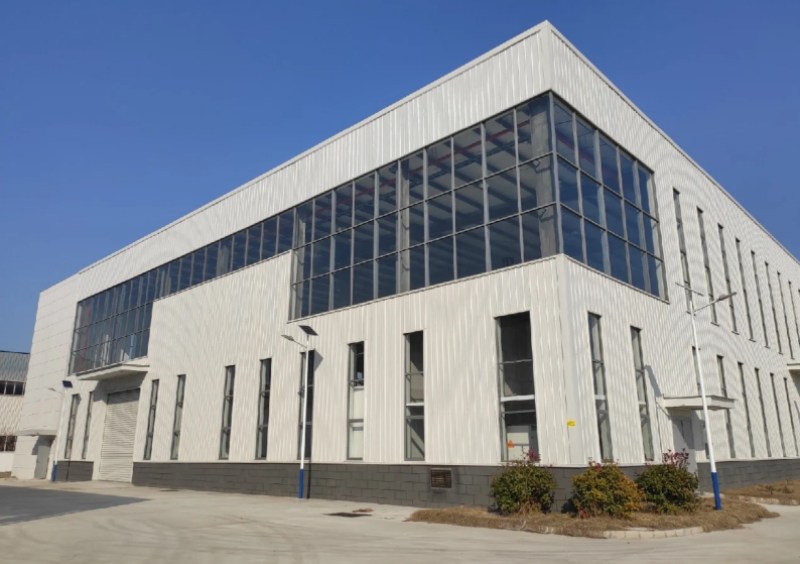
With the advancement of the modern construction industry,steel-structure buildings have gained widespread global adoption.They can be found everywhere—from industrial plants and warehouses to sports stadiums,high-rise towers,and even residential projects.However,for many people encountering steel structures for the first time,a fundamental question often remains:Are steel-structure buildings safe?
This concern is entirely understandable.Unlike traditional brick-and-mortar or concrete structures,steel structures appear"lighter"and more"industrialized,"giving the impression that they lack the same sense of"bulk and solidity."In reality,however,steel structures are not only a vital component of modern architectural systems but are also widely utilized in buildings requiring the highest levels of safety.
This article will systematically address this question by examining it from multiple perspectives,including structural principles,practical applications,potential sources of risk,and comparative analyses.
Are Steel-Structure Buildings Safe?
Provided that design codes are strictly adhered to,certified materials are utilized,and construction is executed by a professional team,steel-structure buildings are exceptionally safe.
In fact,in many extreme environments—such as seismic zones,typhoon-prone regions,and large-span structures—steel structures often outperform traditional concrete structures.
Examples include:
Large-scale airport terminals
Steel frameworks for high-rise skyscrapers
Sports stadiums and exhibition centers
Industrial-grade warehousing and logistics hubs
These types of buildings inherently demand extremely high safety standards,and steel structures represent one of the leading solutions for meeting those requirements.
Why Do Many People Worry About the Safety of Steel-Structure Buildings?
For many individuals encountering steel-structure buildings for the first time,"safety"is almost invariably the first issue that comes to mind.Compared to traditional concrete structures,steel structures often convey a sense of greater lightness and a more industrialized aesthetic.Consequently,many people subconsciously find themselves asking:Can such a building truly be reliable?
In reality,this concern is quite common.Users tend to be particularly cautious when it comes to residential properties,commercial buildings,or projects intended for long-term use.After all,a building involves not only a significant financial investment but also—and more importantly—the assurance of stability and safety throughout its entire service life.
For many,doubts regarding steel structures do not stem from actual engineering flaws,but rather from a sense of unfamiliarity and a lack of prior exposure.
"Looking Light"Does Not Equal"Being Unsafe"
If you are encountering steel-structure buildings for the first time,you will likely have an immediate,intuitive impression:they simply do not*look*as"massive"or"heavy"as traditional concrete buildings.Especially when encountering structural forms involving steel columns and beams,you might subconsciously wonder:"It looks so lightweight—is it really safe?"
Such a thought is actually quite natural.This is because,according to traditional notions,the heavier a building is—and the thicker its walls—the more likely it is to instill a sense of security.However,in modern construction engineering,safety is not determined by"weight."What truly determines a building's structural integrity is the soundness of its overall design,whether its materials meet strength standards,and the stability of its load-bearing system.
In reality,steel itself is a high-strength construction material.For a given load-bearing capacity,steel structures can often achieve superior structural performance with significantly less weight.This is precisely why airports,stadiums,high-rise buildings,and large-scale industrial projects frequently make extensive use of steel structures.In the context of modern architecture,"lightness"signifies greater structural efficiency rather than a lack of sturdiness.
The"Less Substantial"Perception of Factory Pre-fabrication
When you learn that steel-structure buildings are typically manufactured in a factory in advance—and then transported to the site for assembly—you might find yourself asking:"Is this just like putting together a kit?Is it truly reliable?"
Compared to traditional construction methods—which involve on-site bricklaying and concrete pouring—the industrialized approach of steel-structure construction does indeed appear more"modern."Precisely because of this,many people—upon their first encounter with it—feel that it lacks the"substantial"or"solid"feel associated with traditional buildings.
In reality,however,factory pre-fabrication is one of the key advantages of steel structures.Since components are manufactured within a standardized environment,factors such as dimensional accuracy,weld quality,and overall fabrication tolerances are typically much easier to control than they would be during manual on-site construction.
Furthermore,the factory setting allows for comprehensive batch quality control—including weld inspections,anti-corrosion treatment checks,and structural precision calibration.Compared to traditional methods that rely entirely on on-site construction experience,modern pre-fabrication is actually far more effective at ensuring the overall consistency and stability of the structure.
Misconceptions Arising from Poorly Executed Steel Structure Projects
If you have ever encountered poorly executed steel structure projects,you may have formed a negative impression of this type of construction.Issues such as subsequent rusting,water leakage,structural deformation,or visibly shoddy workmanship can indeed influence your judgment regarding the safety and reliability of steel structures.
However,in reality,most of these problems are not inherent flaws of the steel structure itself;rather,they are the result of substandard engineering and construction quality.For instance,the use of substandard steel,inadequate anti-corrosion treatment,non-compliant welding procedures,or cutting corners during the installation phase can all give rise to latent hazards later on.
In reality—whether dealing with steel structures or concrete buildings—safety risks can emerge whenever the design,materials,or construction fail to meet established standards.What truly determines a building's safety is not"what type of structural system was used,"but rather whether the project was executed in strict accordance with standards,whether the materials were up to par,and whether the construction team was professional.These factors are often far more critical than the structural type of the building itself.
Where Do Safety Risks in Steel-Structure Buildings Originate?
Steel-structure construction projects do indeed carry certain safety risks;however,these risks do not stem from the steel structure itself,but rather from issues that may arise during the design,fabrication,construction,or subsequent operational phases—issues that can trigger safety hazards.
In other words,the primary determinant of a building's safety is rarely"whether or not it is a steel structure,"but rather whether the entire engineering project was executed in full compliance with applicable codes and standards.
Flawed Design:Often the Most Overlooked Issue
If you focus solely on a building's finished exterior,it is easy to overlook a crucial fact:the true determinant of safety lies in the preliminary structural design phase.
Before construction can commence on a steel-structure building,extensive structural calculations must typically be performed in advance,covering factors such as:
Building loads(dead and live loads)
Wind loads
Snow loads
Seismic parameters
Foundation stress distribution
If these calculations are inaccurate—or if the local environmental conditions are not adequately factored into the design—safety hazards may persist later on,regardless of how meticulously the subsequent construction work is executed.
For example,in coastal regions,insufficient wind-resistance design can subject a building to excessive structural stress during extreme weather events;similarly,in seismically active zones,a failure to adequately address seismic performance can directly compromise the building's overall stability.
Consequently,when it comes to steel-structure buildings,the design phase is actually far more critical than many people realize.
Material Quality:A Direct Impact on a Building's Lifespan
Beyond the design itself,the quality of the materials used constitutes another core factor influencing a building's safety.
If a project utilizes certified structural steel,the resulting steel structure will typically exhibit highly stable load-bearing performance.However,if substandard or non-compliant steel is used in an effort to cut costs,the ensuing problems will invariably begin to surface over time.For instance,certain low-quality steel materials may exhibit the following issues:
Insufficient strength
Substandard thickness
Poor corrosion resistance
Reduced service life
Particularly in humid,coastal,or high-temperature environments—if corrosion protection measures are inadequate—rust and corrosion issues may emerge after prolonged use.
Therefore,when evaluating a steel structure project,in addition to focusing on price,you should prioritize material standards,corrosion protection processes,and the availability of relevant inspection reports.
The Construction and Installation Phases Are Equally Critical to Final Safety
Even if the design is flawless and the materials meet all standards,improper construction practices can still introduce risks later on.
Steel structure buildings demand a high degree of installation precision,particularly regarding node connections,welding,and overall structural alignment.If the construction team lacks experience or on-site management is lax,latent safety hazards can easily be overlooked.
Common issues include:
Inadequate welding
Bolts not tightened to standard specifications
Misalignment of structural components
Failure to adhere to established construction procedures
These issues may not be immediately apparent during the initial stages of the project;however,as the building undergoes prolonged use and structural load distribution gradually shifts,these underlying problems may eventually surface.
Consequently,engaging a professional construction team is absolutely vital for any steel structure project.
Neglecting Post-Construction Maintenance Can Also Compromise Structural Performance
Some people assume that once a steel structure building is erected,it requires no further management.In reality,however,*any*building requires long-term maintenance—and steel structures are no exception.
Especially in outdoor environments subject to long-term exposure,steel structures typically require periodic maintenance,including:
Corrosion inspections
Protective coating maintenance
Inspection of node connections
Inspection of drainage systems
If these maintenance tasks are consistently neglected over time,the structural integrity and performance of the building may gradually deteriorate.
However,in practical terms,provided that the initial corrosion protection is thorough and subsequent maintenance is conducted according to a regular schedule,steel structure buildings can typically enjoy a remarkably long service life.
How Can You Ensure the Genuine Safety of a Steel Structure Building?
If you are currently considering a steel structure project,it may be helpful to adopt a more holistic perspective:safety is not determined by a single isolated factor,but rather emerges as the collective result of an entire system—encompassing everything from design and construction to long-term maintenance.As long as every single stage of the process is executed in strict compliance with established standards and regulations,the safety of a steel structure building can be fully guaranteed.
1.Select a Professional Design Team
In steel structure projects,the design phase is often the most critical step.You can think of it as the"skeletal blueprint"of the building;if the initial conceptual approach is flawed,it becomes extremely difficult to rectify later on.
A professional structural design team typically does not rely solely on empirical judgment;instead,they perform comprehensive structural calculations based on the actual local environment—taking into account factors such as wind loads,snow loads,and seismic parameters—all of which directly impact the ultimate stability of the building.
Furthermore,different countries and regions adhere to varying design standards—for instance,the EN standards commonly used in Europe,versus the AISC or ASTM standards prevalent in the United States.The very purpose of these codes and regulations is to ensure that the structure maintains an adequate safety margin under diverse environmental conditions.
2.Use Standard-Compliant Steel Materials
If the design represents the"skeletal concept,"then the materials constitute the"physical foundation."Should the materials fail to meet the required standards,every subsequent stage of the construction process will be compromised.
In actual projects,common structural steels—such as Q235 and Q355—are typically selected based on the specific requirements of the project.Additionally,reputable projects generally incorporate complementary anti-corrosion treatments and provide corresponding quality inspection documentation to certify that the materials'strength,toughness,and durability all meet the requisite standards.
From your perspective,assessing the reliability of materials involves looking beyond just the price;more importantly,you must verify the existence of comprehensive inspection records and a traceable,standard-compliant source.
3.Factory-Based Production and Quality Inspection
One significant reason for the growing popularity of steel structures is their industrialized production model.Within a factory environment,structural components are mass-produced according to uniform standards—a process that differs markedly from traditional on-site construction.
Throughout the production process,every critical stage is subject to rigorous control—including welding quality checks,dimensional accuracy calibration,and anti-corrosion coating tests.These measures are implemented to minimize human error as much as possible,thereby ensuring that every batch of components maintains a consistent level of quality.
In other words,this stage serves to"resolve potential issues in advance,"rather than waiting until the components arrive on-site to discover them.
4.Professional Installation and Construction
Even if the preliminary design and materials are flawless,the structural safety of the building may still be compromised if the on-site installation is executed improperly.
The installation of steel structures demands a high degree of precision.Specific details—such as whether bolts are tightened to the specified torque,whether nodal connections are accurately aligned,and whether the overall structure has been correctly plumbed and leveled—directly influence the final load-bearing performance of the building.Many projects that appear to suffer from"post-completion issues"actually stem from problems during the installation phase,rather than inherent flaws in the structural design itself.
5.Regular Maintenance and Inspection
A point often overlooked by many is that steel structures are not a"set it and forget it"type of construction;they still require a certain degree of ongoing maintenance.
This is particularly true in long-term outdoor environments—such as humid,coastal,or high-temperature regions—where structural surfaces and connection nodes will inevitably undergo changes over time.Therefore,regular inspections to check for corrosion,assess the condition of protective coatings,and examine critical connection points are absolutely essential.
Provided that maintenance is carried out diligently,steel-structure buildings can typically enjoy a very long service life while maintaining their structural stability within safe parameters over the long term.
Steel Structures vs.Concrete Structures:Which Is Safer?
Both steel and concrete structures are,in fact,highly mature construction systems with a vast number of successful applications worldwide.In terms of safety*per se*,there is no absolute answer as to which is"safer";rather,safety depends largely on the quality of the design,the standard of construction,and how well the chosen structure aligns with the specific intended use.
Given varying project requirements,the respective advantages of these two structural types will differ.Consequently,a more rational approach is to evaluate which structure is"most suitable"for the task at hand,rather than simply making a binary comparison of inherent superiority or inferiority.
In terms of overall performance,steel structures hold distinct advantages regarding seismic resistance,construction speed,and the ability to create large-span spaces.Conversely,concrete structures offer a more traditional and robust performance in terms of durability and overall structural stability.
Steel Structures vs.Concrete Structures:A Comparison
Comparison Category | Steel Structures | Concrete Structures |
Seismic Performance | Superior — high ductility, excellent energy absorption | Moderate — more rigid structural behavior |
Wind Resistance | Excellent — flexible structural response | Good — but higher self-weight increases load |
Building Weight | Lighter — reduces foundation requirements | Heavier — provides strong inherent stability |
Construction Speed | Fast — prefabrication + quick on-site assembly | Slower — depends heavily on on-site curing and construction cycles |
Structural Span | Strong advantage — suitable for large-span spaces | More limited span capability |
Durability | Depends on anti-corrosion treatment and maintenance | Generally stable — lower routine maintenance needs |
Overall,the differences between the two lie primarily in their distinct"structural characteristics,"rather than in varying degrees of inherent"safety levels."
Which Circumstances Are Steel Structures Safer and More Reliable?
Steel structures are not the"best choice for every scenario."However,in specific environments and for particular functional requirements,their inherent advantages become far more pronounced,allowing their superior safety performance to be fully realized.In other words,when conditions are appropriate,steel structures are not only stable but often prove to be a more suitable choice than traditional structural systems.
1.Seismically Active Regions
If your project is located in a seismically active zone,steel structures are typically one of the preferred solutions.
The reason is that the impact of an earthquake on a building is rarely a matter of mere"static pressure,"but rather involves continuous shaking and dynamic shock.In such scenarios,if a building is overly rigid,it becomes more susceptible to localized cracking or even structural failure.
Steel structures are characterized by their superior ductility;when subjected to seismic forces,they can absorb energy through controlled deformation,thereby mitigating the risk of sudden,catastrophic damage.This inherent"resilience"allows them to maintain overall stability more effectively within a seismic environment.
2.Regions Prone to Typhoons or Strong Winds
In coastal cities or areas subject to high wind speeds,buildings must withstand not only static loads but also the continuous impact of wind pressure.
The advantage of steel structures in such environments lies primarily in their more flexible load-bearing system,which—through specific structural design—can be engineered to achieve higher levels of wind resistance.Furthermore,due to their relatively lighter self-weight,the structural response to wind loads can be more effectively managed and controlled.
Consequently,in regions frequently affected by typhoons,steel structural systems are often the preferred choice for industrial plants,logistics centers,and large-scale public facilities.
3.Buildings Requiring Large-Span Spaces
If your project requires a vast,open interior space free of numerous internal supports—such as a warehouse,exhibition hall,or sports arena—steel structures represent one of the most common and practical solutions available.
Because steel possesses inherently high tensile strength,it enables the design of beam-and-column systems capable of spanning much greater distances.This reduces the need for internal supports,thereby allowing for greater flexibility in how the space is utilized.
This structural advantage not only enhances operational efficiency but also makes the overall space more adaptable to diverse functional requirements—whether for adjusting warehouse layouts or reconfiguring event venues.
4.Rapid Construction Projects
For projects with tight deadlines—such as emergency facilities,temporary structures,or modular buildings—the construction efficiency advantages of steel structures are particularly pronounced.
Most structural components can be prefabricated in a factory in advance and then transported directly to the site for assembly.This approach significantly reduces on-site construction time while simultaneously minimizing the impact of unpredictable factors such as weather conditions and labor availability.
For projects requiring rapid commissioning,this construction model offers not only high efficiency but also greater consistency in overall quality.
5.Requirements for Scalable or Adaptable Structures
If your project involves the potential for future expansion,dismantling,or relocation,steel structures offer superior flexibility.
Thanks to their modular nature,steel buildings can be expanded to accommodate changing spatial requirements or,when necessary,partially dismantled and reconfigured—unlike traditional concrete structures,which are constrained by the inherent rigidity of their monolithic construction.
This inherent flexibility makes steel structures a highly adaptable choice for various commercial developments,temporary facilities,and projects designed for future growth.
Conclusion
Provided they adhere to rigorous design codes and standardized construction practices,steel structures constitute a highly safe and reliable building system.
If you are planning a steel structure project,selecting a team with proven engineering expertise and standardized operational capabilities is crucial.A professional team can provide not only sound structural designs but also comprehensive quality control throughout the entire process—from material selection and factory fabrication to on-site installation—thereby mitigating risks at the source.
WZHbuild·Focused on Safety and Structural Efficiency
As a brand dedicated to steel structure and modular building solutions,WZHbuild is committed to providing clients worldwide with building systems that are both safer and more efficient.