Why Steel Structure Logistics Park Are Becoming Mainstream
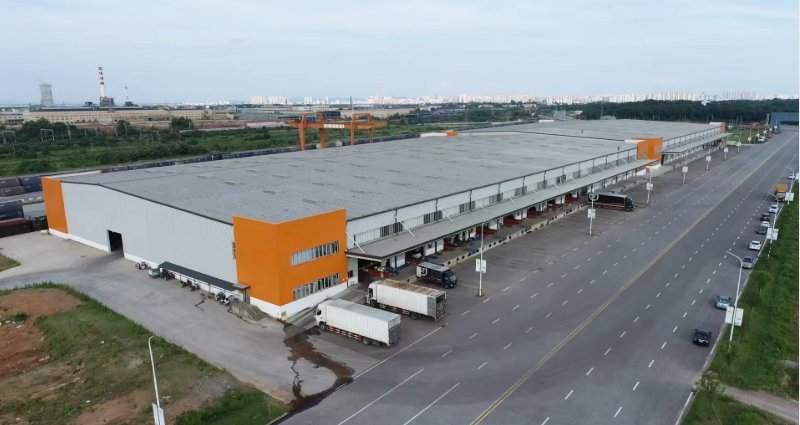
Many companies encounter several very real problems when building logistics warehouses:
Long construction cycles,impacting project launch
Low space utilization of traditional warehouses
Difficulty in later expansion and renovation
Difficulty in the placement of automated equipment
Difficulty in upgrading existing warehouses as logistics business grows
Especially for e-commerce warehousing,cross-border logistics,and large distribution centers,warehouses are no longer just"storage space,"but crucial infrastructure directly impacting logistics efficiency and operating costs.
While traditional concrete warehouses are widely used,they are increasingly unable to meet the demands of automation,high turnover,and flexible expansion in the context of the rapid development of the modern logistics industry.Many companies are beginning to realize that warehouses not only need to be functional,but also need to adapt to future business growth and intelligent logistics upgrades.
For this reason,more and more logistics parks,e-commerce warehousing centers,and industrial logistics bases are prioritizing steel structure warehouses.Compared to traditional buildings,steel structures have significant advantages in construction speed,spatial layout,automation adaptability,and later expansion.
So,why are steel structure logistics warehouses becoming increasingly popular?Compared to traditional concrete warehouses,what practical problems does it actually solve?
Below,we will analyze in detail the advantages of steel structure logistics warehouses,starting from several core needs that logistics companies care about most,and why it is becoming the mainstream solution for modern logistics warehousing construction.
Why do large logistics parks prefer steel structure warehouses?
Large logistics parks are increasingly inclined to adopt steel structure warehouses because steel structures better meet the needs of the modern logistics industry for efficiency,space utilization,and future expansion capabilities.Compared to traditional concrete buildings,steel structures are better adapted to modern intelligent logistics systems,and therefore have gradually become the mainstream solution in the construction of large logistics centers.
With the development of e-commerce,cross-border logistics,and intelligent warehousing,modern logistics warehouses are no longer simply"storage space."Today's large logistics centers typically need to simultaneously meet the demands of high-frequency cargo turnover,automated equipment operation,and large-scale warehouse management,which places higher demands on the warehouse building itself.
More Suitable for Large-Scale Warehousing and Automated Logistics
Modern logistics parks typically require larger storage space and higher space utilization to provide smoother logistics flow.Some logistics parks even incorporate automated equipment movement,all of which require more space.
The large-span,column-free design of steel structures provides a more open internal space.This not only facilitates high-bay racking layouts but also improves the operational efficiency of forklifts,AGV robots,and automated sorting systems.
Compared to traditional concrete warehouses,steel-structured logistics warehouses are easier to scale and height,and offer more flexible layout options.For large logistics parks,this translates to higher warehousing efficiency and stronger automation compatibility.
Faster construction cycles help projects go into production sooner.The logistics industry places great emphasis on time costs.For large logistics projects,the earlier they are operational,the sooner they can generate revenue.
Most components of steel-structured warehouses can be prefabricated in the factory,with on-site assembly primarily involved.Therefore,construction efficiency is typically significantly higher than traditional buildings.
In constructing large logistics warehouse projects,steel structures can often help companies shorten the overall construction period,thereby reducing labor costs and the risk of delays.
For many logistics companies,shorter construction periods often mean faster cash flow
Higher space utilization.Large logistics parks have very high requirements for warehouse space utilization.Especially in scenarios like e-commerce warehousing,smart logistics centers,and automated storage and retrieval systems(AS/RS),warehouse space directly impacts operational efficiency.
Steel structure warehouses allow for higher headroom,making them more suitable for high-bay racking systems,AS/RS,and multi-level logistics equipment layouts.By improving vertical space utilization,businesses can achieve greater storage capacity within the same floor area.
More Flexible Expansion and Upgrades
The logistics industry changes rapidly.Many logistics parks often require expansion or functional redesign after a few years of operation.
Traditional concrete warehouses are typically difficult to renovate,while steel structures,with their modular design,facilitate expansion and upgrades.Lateral expansion is possible,adding mezzanine platforms and other features to improve space utilization.
For large logistics parks,this long-term scalability is crucial,as it helps businesses better adapt to future business growth.
More in Line with Modern Logistics Trends
With the increasing efficiency and automation of logistics,traditional warehouse buildings are increasingly unable to meet the demands of modern logistics systems.
Steel structure warehouses are becoming the mainstream choice for modern logistics park construction due to their advantages such as rapid construction,flexible upgrades,and strong automation adaptability.
For many companies,steel structures are no longer just an"architectural solution,"but a long-term warehousing solution that better suits the future development of logistics.
How do steel structure logistics warehouses reduce operating costs?
One of the most pressing questions for many companies when building a logistics warehouse is:"How much money can a steel structure warehouse actually save?"
While the unit price of some materials in steel structures may be higher than that of traditional buildings,from an overall project perspective,steel structure logistics warehouses can typically help companies reduce comprehensive construction and long-term operating costs.Especially for the logistics industry,what truly matters is not the price of a single material,but the return on investment over the entire warehouse's lifecycle.
For example,a logistics warehouse of approximately 1,000 square meters would typically have higher overall construction costs and a longer construction period if a traditional concrete structure were used.Steel structures,however,utilize a factory prefabrication+on-site assembly model,effectively reducing costs in terms of labor,construction time,and foundation construction.
Below is a common comparison(varies may exist depending on the country,region,and configuration):
Item | Traditional Concrete Warehouse | Steel Structure Logistics Warehouse |
Construction Period | 4–6 months | 1–3 months |
Foundation Construction Cost | Higher | Lower |
Labor Cost | Higher | Lower |
Overall Cost per 1000㎡ | Higher | Better cost-effectiveness |
Difficulty of Later Expansion | High | Low |
Automation Upgrade Cost | Higher | More flexible |
For logistics companies,construction time often directly impacts profitability.Assuming a warehouse is operational two months ahead of schedule,the company can start its business sooner.This is especially true for e-commerce warehousing and cross-border logistics projects,where earlier production often means faster cash flow.
Besides shortening the construction period,steel structures can effectively reduce foundation construction costs.Due to the lighter overall weight of steel structures,the requirements for foundation bearing capacity are relatively lower,thus reducing the need for foundation construction.For large logistics warehouse projects,this savings are usually very significant.
Furthermore,modern logistics warehouses are not"built once and for all."Many companies need to add automation equipment,adjust warehouse layouts,or expand warehouse areas after several years of operation.Steel structures,with their modular design,facilitate easier retrofitting,effectively reducing additional costs associated with future upgrades and downtime.
From a long-term operational perspective,steel structure logistics warehouses not only help companies reduce construction investment but also improve operational efficiency and scalability.Therefore,more and more logistics companies are choosing steel structures as a more cost-effective modern warehousing solution in the long run.
Are steel structure warehouses suitable for automated warehousing?
Steel structure warehouses are highly suitable for automated warehousing and have become one of the most common building forms in modern smart logistics centers.As the logistics industry continues to evolve towards intelligence and automation,traditional warehouses struggle to meet the space,equipment,and operational efficiency requirements of modern logistics systems,while steel structures are well-suited to these needs.
Modern automated warehousing typically requires a large number of intelligent devices,such as automated storage and retrieval systems(AS/RS),AGV robots,conveyor systems,and intelligent sorting lines.These devices place high demands on warehouse space layout and structural stability,and the large-span design of steel structures provides more flexible and efficient internal space.
Compared to traditional concrete warehouses,steel structures more easily achieve large-area column-free spaces.This means the warehouse interior is not restricted by numerous load-bearing columns,allowing for a more rational layout of automated equipment and smoother operation paths for forklifts and logistics robots,thus improving overall logistics efficiency.
Furthermore,steel structure warehouses typically achieve higher ceiling heights.For modern automated storage and retrieval systems(AS/RS),warehouse height directly impacts storage capacity.Higher ceiling heights support high-bay racking systems and high-density storage models,thereby increasing the utilization rate of storage space per unit area.
The automated logistics industry is developing very rapidly,and many companies will need to continuously upgrade their equipment systems over the next few years.Steel structure warehouses,due to their flexible structure,facilitate equipment replacement,system upgrades,and internal layout adjustments without requiring large-scale demolition and alterations.This upgradeability is one of the key reasons why steel structure warehouses are becoming increasingly popular in the field of smart logistics.
Therefore,whether it's large e-commerce warehousing centers,smart distribution bases,or modern industrial logistics parks,steel structures have become the mainstream choice for automated warehousing construction.
Is it easy to expand a steel structure warehouse later?
One of the biggest advantages of steel structure warehouses is their strong ability to be expanded later.For the logistics industry,business scale and warehousing needs often grow with market changes.Therefore,many companies consider future expansion and upgrades from the initial construction phase.
Compared to traditional concrete buildings,steel structures offer greater flexibility in later modifications.Due to their modular design,many warehouses can be extended directly from the existing structure during subsequent expansions,reducing the difficulty of overall renovations and shortening construction time.
As businesses grow,warehouses typically face challenges such as increased inventory,a larger number of SKUs,and the need to upgrade logistics equipment.If the existing warehouse cannot be flexibly expanded,companies may need to build new warehouses later,increasing investment costs and impacting operational efficiency.
Steel structure warehouses allow for easier addition of storage areas,expansion of loading and unloading platforms,and the addition of automated equipment areas.Furthermore,in some projects,mezzanine platforms can be added or internal functional zoning can be adjusted to adapt to new logistics operational needs.
For logistics companies,warehouses are not just buildings for current use,but also long-term infrastructure investments.The greater flexibility and scalability of steel structures help companies reduce limitations on future development,which is why more and more large-scale logistics projects are prioritizing steel structure solutions.
What are the lifespan,safety,and fire resistance of steel structure warehouses?
Many first-time users of steel structure warehouses worry about their lifespan,safety,and fire resistance.However,modern steel structure logistics warehouses are widely used in industrial buildings,logistics parks,and large-scale warehousing projects,and possess mature engineering design and safety systems.
Under normal design and maintenance conditions,steel structure warehouses can typically last for decades.Modern steel structure buildings enhance durability through galvanizing,anti-corrosion coatings,and weathering steel materials,effectively reducing rust and corrosion.For long-term operational buildings like logistics warehouses,a mature anti-corrosion system ensures structural stability and a long service life.
Furthermore,steel structures themselves have good toughness and are relatively lightweight,giving them a significant advantage in earthquake and wind resistance.Especially in areas prone to earthquakes or typhoons,steel structure warehouses typically exhibit better structural stability and safety performance.
Regarding fire protection,modern steel structure warehouses also have mature solutions.Through fire-retardant coatings,fire-resistant sandwich panels,automatic sprinkler systems,and fire compartment design,steel structure warehouses can meet most international and regional fire safety regulations.
Modern large-scale logistics warehouse projects are typically designed and planned for fire safety according to professional building codes.Therefore,steel structure warehouses not only meet the needs of modern logistics operations but also ensure long-term safety and building reliability.
Why do steel structure logistics warehouses represent the future trend?
The increasing popularity of steel structure logistics warehouses stems from their alignment with the development direction of the modern logistics industry.As the logistics industry continues to evolve towards automation,intelligence,large-scale operations,and high efficiency,traditional warehouse buildings are increasingly unable to meet the space,efficiency,and flexibility requirements of modern logistics systems.
Compared to traditional construction methods,steel structure warehouses offer faster construction speeds,higher space utilization,and more flexible expansion capabilities.These advantages not only help companies improve current operational efficiency but also better adapt to future business upgrades.
Meanwhile,the modern logistics industry increasingly relies on automated equipment and intelligent warehousing systems,and steel structures possess natural advantages in spatial layout,floor height design,and equipment compatibility.Therefore,whether it's automated storage and retrieval systems(AS/RS),e-commerce fulfillment centers,or large regional distribution centers,steel structures are becoming the mainstream choice.
For companies planning to build modern logistics centers,steel structures are no longer just an"optional solution,"but are gradually becoming the industry standard for modern logistics warehousing construction.
Summary
Regarding steel structure logistics warehouses,you might be more interested in understanding:can they help companies complete the construction of modern logistics warehouses faster,at lower costs,and more efficiently,while possessing long-term operational value?
We believe the above information has given you a comprehensive understanding.Steel structure logistics warehouses are the future trend.If you are preparing to build a large logistics warehouse,consider choosing a steel structure directly.It will reduce your initial construction time and allow you to start operations faster.
If you have any further questions about steel structure logistics warehouses,please contact us.WZHbuild,as a Chinese steel structure company,will provide you with one-on-one service.