How Much Wind and Snow Load Can an Industrial Steel Building Withstand
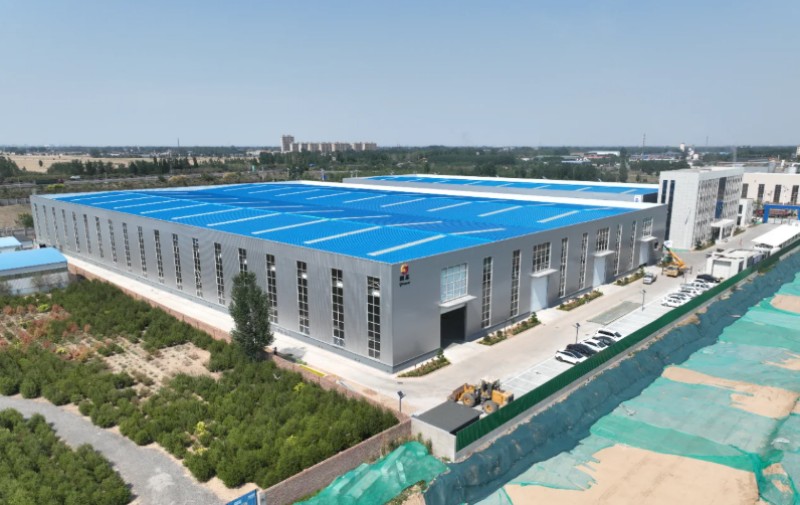
Imagine investing millions of dollars into a high-end logistics warehouse,an industrial manufacturing plant,or a private aircraft hangar,only to have its roof compromised by a severe winter blizzard or a sudden tropical hurricane.
For international project owners and contractors,a building’s wind and snow load rating is not just a structural parameter.It is the definitive red line that protects your internal assets,ensures structural longevity,and dictates whether your project will pass strict local building permit approvals.
In this comprehensive guide,WZHbuild breaks down how structural steel buildings are engineered to withstand extreme weather,ensuring your next heavy-duty commercial structure remains absolutely secure.
What Are Wind and Snow Loads in Steel Buildings?
When designing large-span steel structures,engineers look far beyond the weight of the steel itself.They calculate environmental forces,primarily categorized into Wind Loads and Snow Loads.
What is Wind Load?
Wind load refers to the structural pressure and suction forces exerted by moving air onto a building.For large-span structures like aircraft hangars or expansive factories,wind does not just push against the walls;it creates a massive upward suction(wind uplift)that attempts to rip the roof off.
The calculation depends on the basic wind speed of your region,local terrain roughness(coastal vs.urban),and the total height of the building.
What is Snow Load?
Snow load is the downward vertical force exerted on a roof by the accumulation of snow and ice.Unlike rain,which drains immediately,snow accumulates,drifts unevenly around roof obstructions(like ventilation fans or parapets),and grows significantly heavier as it melts and refreezes into ice.
For buildings located in high-latitude regions such as Canada,Northern Europe,or parts of the US,a roof must be engineered to carry thousands of pounds of sustained snow weight.
Here is the professional yet accessible English translation for this section,perfectly blending engineering terminology with a conversational,expert-guided tone to maximize readability and B2B engagement:
Why Large-Span Steel Buildings Must Prioritize Wind and Snow Load Ratings
When planning a large-span steel building,most people naturally focus on maximum clear-span capabilities,baseline budgeting,and how fast the construction can be completed.However,the true anchor of long-term structural integrity—and the issue most frequently overlooked—is the wind and snow load rating.
Facilities like warehouses,sports arenas,logistics hubs,and aircraft hangars demand massive,column-free interior spaces.This architectural requirement means the entire structure relies heavily on the collective load-bearing capacity of the steel components.If you underestimate wind or snow loads during the initial blueprint phase,you are setting the stage for future structural deformation,chronic water leakage,or even catastrophic safety failures.
Why Are Large-Span Structures More Vulnerable to Wind and Snow?
Standard residential buildings have small spans and numerous interior load-bearing walls.This segments the structural stress,allowing wind pressure or snow weight to distribute evenly across various components,which naturally yields high structural stability.
Large-span industrial steel buildings operate on a completely different framework.To achieve wide-open interior spaces,intermediate columns are eliminated.This means the entire roof weight,dynamic wind forces,and dead snow loads are concentrated directly onto the primary steel columns and rafters.
The larger the span,the higher the risk of deflection and structural deformation.Think of it like a long wooden plank—it bends far more easily under weight than a short one.Therefore,for large-span engineering,it isn’t just about"getting the building up";it is about guaranteeing it stays perfectly stable under decades of extreme,real-world weather.
Why Wind Loads Are Far More Dangerous Than You Think
It is a common misconception that wind is just a simple horizontal force pushing against a wall.For large steel structures,the aerodynamics are far more complex.High-velocity airflow moving over massive,expansive roofs creates a powerful upward suction effect,scientifically known as wind uplift.
This risk escalates dramatically in coastal hurricane zones,typhoon-prone regions,or wide-open industrial parks.Without surrounding buildings to act as windbreaks,continuous wind pressure batters the roof and cladding panels,literally trying to"peel"the roof off.
Statistically,when a steel building suffers wind damage,it is rarely the massive primary steel frame that fails first.Instead,it is the roof panels,purlins,or connection bolts that loosen and warp under stress.This is exactly why premium engineering focuses so heavily on bracing systems,rigid moment connections,anchor bolt embedding,and wind-resistant cladding profiles—because sustained wind load causes structural fatigue over time.
Why Snow Loads Cannot Be Ignored
Compared to high winds,snow load is arguably the most underestimated environmental force because snow looks light and fluffy.However,as it packs down—especially when dealing with dense,wet snow—the cumulative weight on a large roof surface is staggering.
For large-span roofs,the primary hazard isn't a brief,heavy snowstorm;it is consecutive days of heavy snow accumulation that fails to melt.Under these conditions,the vertical pressure on the roof spikes continuously,driving structural deflection.
Structural issues rarely happen overnight.It typically starts as micro-deformations,which gradually evolve into roof sagging,connection fatigue,standing-water pooling,and eventually localized structural instability.This is why high-latitude regions like Canada and Northern Europe enforce incredibly stringent,non-negotiable roof snow load calculations.
Why Large-Span Buildings Require Professional Structural Engineering
Some buyers assume that simply"making the steel thicker"solves all safety issues.In reality,structural safety in steel engineering cannot be fixed by brute force or throwing more raw material at it.
True structural stability comes down to a meticulously optimized load path—meaning the harmony between main rafter designs,truss configurations,bracing layouts,and connection detailing.Different architectural engineering designs handle wind and snow loads with completely different efficiency levels.
For instance,a standard 30-meter(100-foot)clear-span blueprint might perform flawlessly in a calm inland valley.Yet,if that exact same building is relocated to a coastal typhoon zone,the entire structural strategy must be recalibrated.Local wind speeds,ground snow data,seismic ratings,and thermal expansion properties must all directly dictate the final engineering blueprint.
What Happens If Your Load Rating Is Insufficient?
Structural red flags are rarely visible the day a project is completed;they are stealth issues that manifest over years of environmental exposure.The most common early warnings are roof deflection,localized sagging,and persistent water leaks.
We frequently see warehouses where,after a few years of operation,the roof panels have warped so severely that the owners are forced to halt operations,install aftermarket interior support columns,or pay out-of-pocket for expensive retrofitting.These issues are almost always the result of long-term load fatigue rather than a single storm.
In worst-case scenarios,extreme weather can trigger localized structural failure.Not only does this halt daily revenue-generating operations,but it can also lead to rejected commercial insurance claims,government code violations,and skyrocketing maintenance costs.Projects that cut corners on structural standards to save a bit of upfront budget almost always pay a much higher price later in emergency repairs and structural reinforcement.
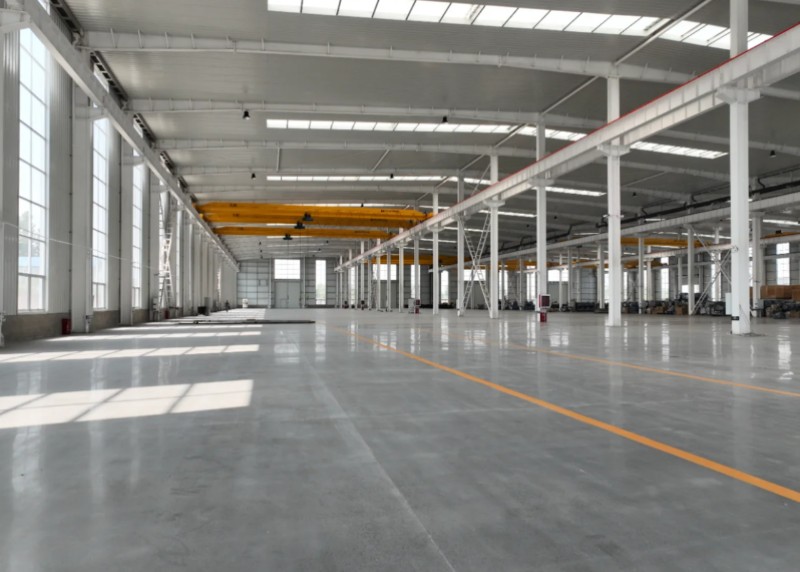
International Building Codes:What Standard Does Your Country Require?
Importing a steel building requires strict compliance with your local jurisdiction.Standard"one-size-fits-all"pre-engineered kits often fail overseas compliance tests because wind and snow risks vary drastically by location.
Here is a quick reference table of how different industrial applications map to global standards like the International Building Code(IBC)and Eurocodes:
Building Application | Key Risk Factors | Typical Design Standards (IBC / Eurocodes) |
Logistics Warehouses | Large roof surface area, high-piled stock vulnerability. | ASCE 7 / EN 1991-1-3: Focused on uniform snow load & drift prevention. |
Aircraft Hangars | Massive clear-span layouts, massive door openings. | IBC Chapter 16 / EN 1991-1-4: High wind-uplift and internal pressure design. |
Heavy Industrial Plants | Overhead crane operations, roof-mounted HVAC units. | AISC 360 / EN 1993: Combined structural dead loads with extreme climate loads. |
Different export countries and regions utilize architectural engineering methodologies and load combination systems that differ fundamentally.WZHbuild conducts structural detailing in strict accordance with the world's leading building code frameworks:
Target Market & Mainstream Code Frameworks | Core Design Foundations & Standards | Critical Structural Response Focus |
North American / Americas Market
IBC (International Building Code) | ASCE 7 (Minimum Design Loads)
AISC 360 (Specification for Structural Steel Buildings) | Strictly differentiates wind velocity determination methods (using the 3-Second Gust wind speed) and enforces exceptionally rigid calculations for localized components under wind uplift forces. |
European Market
Eurocodes | EN 1991 (Actions on structures)
EN 1993 (Design of steel structures) | Introduces highly sophisticated topography correction factors and provides an exceptionally precise computational model for unbalanced/drifting snow loads in high-latitude regions. |
Australia / New Zealand Market
AS/NZS Codes | AS/NZS 1170.2 (Wind actions)
AS/NZS 4100 (Steel structures) | Specifically implements stringent wind fatigue design parameters and elevated wind-load metrics tailored for cyclone-prone territories (Cyclone Regions). |
Engineering Peace of Mind:How WZHbuild Customizes Structural Safety
At WZHbuild,we do not believe in generic structures.Every factory,warehouse,and hangar we manufacture is fully customized based on the precise geographical coordinates and historical meteorological data of your job site.
Precision Engineering Modeling
Our engineering team utilizes advanced software like Tekla Structures,PKPM,and 3D3S to run comprehensive stress simulations.We design using 50-year or 100-year extreme weather return periods,ensuring your structural frame safely distributes heavy snow and wind loads down to the foundation.
Premium Material Selection
High-Strength Steel Framework:We utilize premium Q355B,Q420B,or certified equivalent foreign grades to maximize load-bearing capacity without adding unnecessary dead weight.
Heavy-Duty Cladding Systems:Our roof panels feature advanced mechanical standing-seam joints and anti-wind-strip designs,providing exceptional resistance to wind uplift and water penetration.
Corrosion Resistance:For coastal structures subject to high wind and salt spray,we offer heavy-duty hot-dip galvanization and specialized multi-layer paint coatings to stop rust before it starts.
3 Common Mistakes Overseas Buyers Make Regarding Load Ratings
To avoid costly project delays,building rejections,or structural failures,keep these three critical pitfalls in mind when sourcing your steel structure:
Mistake 1:Evaluating Quotes by Price Alone.Low-cost suppliers frequently cut corners by thinning the steel profiles or widening the purlin spacing,silently dropping your wind and snow load capacity below legal limits.
Mistake 2:Forgetting Local Code Approvals.Always obtain the required local climate metrics(e.g.,wind speed in mph or m/s,snow load in kN/m²or psf)before manufacturing begins,ensuring your structural calculation book can be stamped by a local engineer.
Mistake 3:Overlooking Roof Appendages.Parapets,solar panel arrays,and large industrial ventilation systems change the wind flow and create localized snow drifts.These must be declared during the early blueprint phase.
Conclusion
A steel building’s safety profile should never be left to guesswork.Investing in a properly engineered wind and snow load rating is the ultimate insurance policy for your commercial operations,your inventory,and your workforce.
Planning your next industrial expansion or commercial facility?
Share your project location with us.WZHbuild’s experienced engineering team will provide a complimentary preliminary structural load calculation and a customized quotation tailored to your local building codes.
[Contact WZHbuild Today for Your Free Structural Safety Evaluation]
Quick FAQ for steel building
Q1:What is a typical safe wind rating for a standard WZHbuild steel building?
WZHbuild custom-engineers buildings to withstand wind speeds ranging from 90 mph(145 km/h)up to 180 mph(290 km/h)or higher,depending entirely on whether your project sits in a calm inland valley or a high-risk tropical hurricane zone.
Q2:How does roof pitch affect a steel building's snow load capacity?
A steeper roof pitch(such as a 4:12 slope or higher)allows snow to slide off naturally,reducing the accumulated weight on the structure.Flat or low-slope roofs retain snow longer and require heavier,reinforced steel trusses to handle the sustained weight.
Q3:Can WZHbuild provide the engineering calculation books required for my local building permit?
Yes.WZHbuild delivers comprehensive architectural blueprints,detailed Tekla structural models,and official engineering calculation sheets detailing all wind,snow,and seismic load designs,making it easy for your local registered engineer to review and stamp.