How to Choose a Steel Structure Supplier
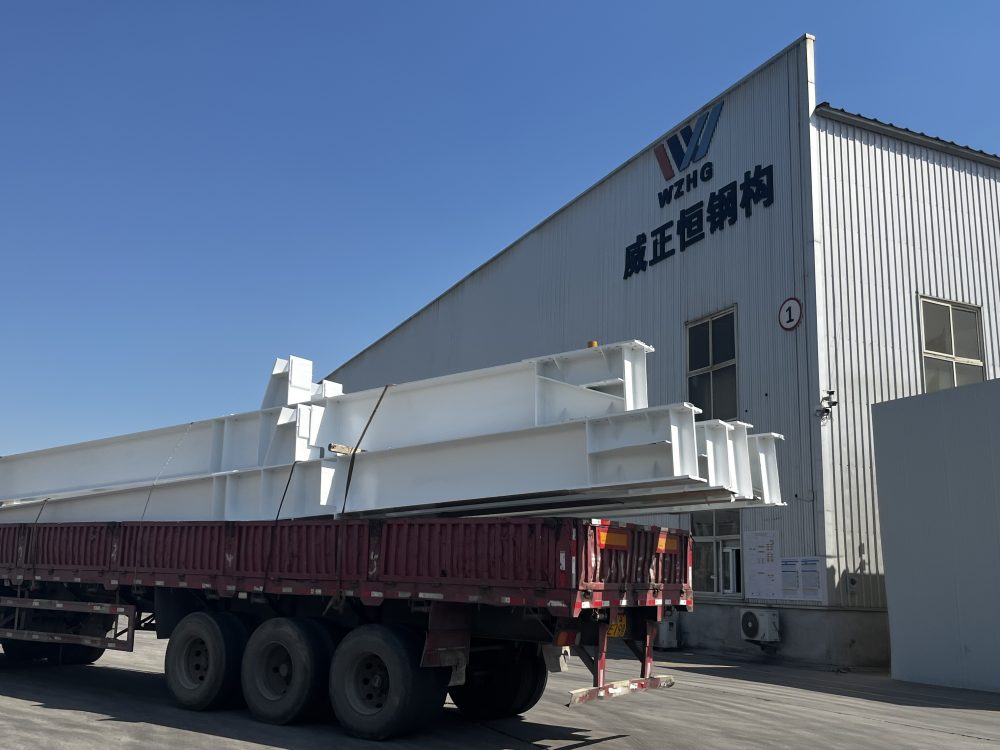
When selecting a steel structure supplier, you should not focus solely on the price quote. A suitable supplier must meet requirements across several areas, including engineering design, material quality, production capacity, quality control, standards compliance, delivery capabilities, project experience, and after-sales support.
A supplier offering a low initial quote might end up costing you far more in the long run if issues arise—such as design revisions, non-compliant material specifications, production delays, or on-site installation problems. What truly matters is whether the structure, service, and project risk profile align with the price quoted.
This article outlines how to objectively select the right steel structure supplier by evaluating factors such as project requirements, engineering design, steel quality, production capacity, quality management, certifications, project experience, pricing, delivery, communication, and after-sales support.
Evaluate the Supplier's Engineering and Design Capability
One of the most critical capabilities to look for in a steel structure supplier is their ability to translate your building requirements into a structural solution that is sound, safe, and constructible. For a large-scale warehouse, production workshop, or industrial building, the supplier provides more than just a few steel columns and beams; they deliver a complete structural system that requires the coordination of calculation, design, fabrication, and on-site installation.
A comprehensive steel structure project typically encompasses columns, beams, purlins, girts, bracing systems, connections, and roofing and wall systems, while also accounting for the column base reactions exerted on the foundations. Large-span warehouses or industrial plants may also involve overhead cranes, equipment loads, suspended loads, and specific operational conditions. Failure to fully consider these factors during the design phase often leads to increased costs for materials, fabrication, and on-site construction due to subsequent modifications.
Check Whether the Supplier Has In-House Engineering Capability
You should first determine whether the supplier has an in-house engineering team and understand the specific responsibilities of their engineers.
Comprehensive engineering services typically include structural scheme design, structural calculations, connection design, foundation load data, construction drawings, and steel component fabrication drawings. Projects with complex structures may also require analysis regarding wind loads, snow loads, seismic effects, and equipment loads.
It is important to note that while a supplier may have an in-house engineering team, this does not necessarily mean that a third-party engineering model is unreliable.
Some steel structure companies maintain internal engineering departments, while others partner with specialized engineering firms on a long-term basis. Both models are viable for actual projects; the key is to clarify in advance who is responsible for design, review, and modification, as well as who bears ultimate liability for the design documents.
If the supplier is responsible only for steel structure fabrication while the structural design is handled by a third party, it is best to clearly define the scope of work and responsibilities for all parties before signing the contract. This helps prevent future disputes regarding liability for design issues or the cost of modifications.
Check Whether the Design Meets Local Requirements
For international steel structure projects, it is crucial that the supplier is familiar with the design codes applicable to the project location.
Requirements regarding building loads, structural safety, materials, and connection design vary across countries and regions. For instance, projects in the United States may involve local building codes and relevant structural design standards; European projects typically utilize Eurocodes; and Australian projects may involve the NCC and AS/NZS series of standards. Even if building dimensions are identical, the final structural design may vary depending on the project site's specific basic wind speed, snow load, or seismic conditions.
Therefore, when requesting a quote, do not simply tell the supplier:
"We need a 10,000 sqm steel warehouse."
More valuable information includes the project location, intended use, dimensions, span, eave height, load conditions, and local design requirements.
If you already have architectural design drawings, you should provide them as well. The more complete the information provided to the supplier, the easier it is for their engineering team to accurately understand project conditions and avoid the need for repeated revisions later on.
Review Engineering Documents and Previous Design Experience
You cannot judge a supplier's engineering capabilities solely by claims on their website such as "professional engineers" or "advanced engineering design."
You can ask the supplier to specify the engineering documents typically provided for projects—such as structural calculation reports, general layout drawings, elevations, connection details, fabrication drawings, and component lists. The specific scope of documentation should be determined based on project size, the contractual scope, and local approval requirements.
Past projects of a similar nature are also valuable references. If you plan to build a production workshop with a 30–40 meter span, it is more relevant to know whether the supplier has built structures with similar spans than to know if they have completed a large number of small-scale steel structure projects.
You should also look for the supplier's ability to explain how they handled actual engineering challenges in past projects—such as controlling deflection in long-span structures, accounting for crane loads, adjusting cross-sections under varying load conditions, and communicating design changes to the production team.
Do not simply ask, "Can you design it?" Instead, delve deeper by asking: "Who performs the design? Which standards are used? What documents are provided? How is the design verified?"
These questions help you more accurately assess the supplier's engineering capabilities and clarify the responsibilities of both parties before the project officially begins.
Engineering Capability Should Match Project Complexity
Not all steel structure projects require the same level of engineering services.
For a simple single-story warehouse, the structural system may be relatively straightforward; however, for large industrial plants, aircraft hangars, stadiums, or production workshops equipped with heavy-duty overhead cranes, the design process is typically much more complex. If a project involves column-free spans of 30 meters, 40 meters, or even greater, or if the structure must withstand significant loads from cranes, equipment, or wind, the supplier's structural analysis capabilities become even more critical. For such projects, you should focus on whether the supplier has experience with projects involving similar spans, loading conditions, and building functions.
Ultimately, the benchmark for engineering capability is not the quantity of design software or engineers a supplier possesses, but rather their ability to formulate a sound structural scheme—based on the project location, intended use, loading conditions, and construction requirements—and to accurately translate that design into engineering documentation ready for fabrication and installation.
Check Steel Grades and Material Quality
Steel quality cannot be judged solely by marketing terms like "high-strength steel" or "premium-quality steel." You need to see the specific material grades and the corresponding documentation.
Different markets utilize different material standards. For instance, specifications such as ASTM A36 and ASTM A572 are common for structural steel in the U.S., and the official ASTM standards catalog lists a wide range of standards for structural steel used in construction.
When a supplier provides a quote, you can ask: "What steel grade will be used for the primary structure?"
At the same time, confirm whether a Mill Test Certificate (material quality certificate) or material testing documentation is available and if the material batches are traceable.
This is particularly important for large-scale projects. You need to verify that the steel specifications in the design documents match the materials actually procured and used in production.
Steel surface treatment also warrants attention. For standard indoor structures, a conventional coating system may suffice; however, if the building is located in a high-humidity, coastal, or corrosive environment, you must consider anti-corrosion measures—such as sandblasting, primers, intermediate coats, topcoats, or hot-dip galvanizing—based on the specific conditions.
Determine Whether the Supplier Is Actually Capable of Manufacturing
A "supplier" is not necessarily a "manufacturer."
There are various types of steel structure companies in the market: some own their own factories and production lines, others focus primarily on engineering, procurement, and project management, while some operate as trading companies or project integrators. None of these models is inherently better or worse than the others, but you need to know who is actually responsible for production and who bears ultimate liability for quality issues.
If a company claims to be a manufacturer, you can ask for details regarding factory size, annual output, key production equipment, and production processes.
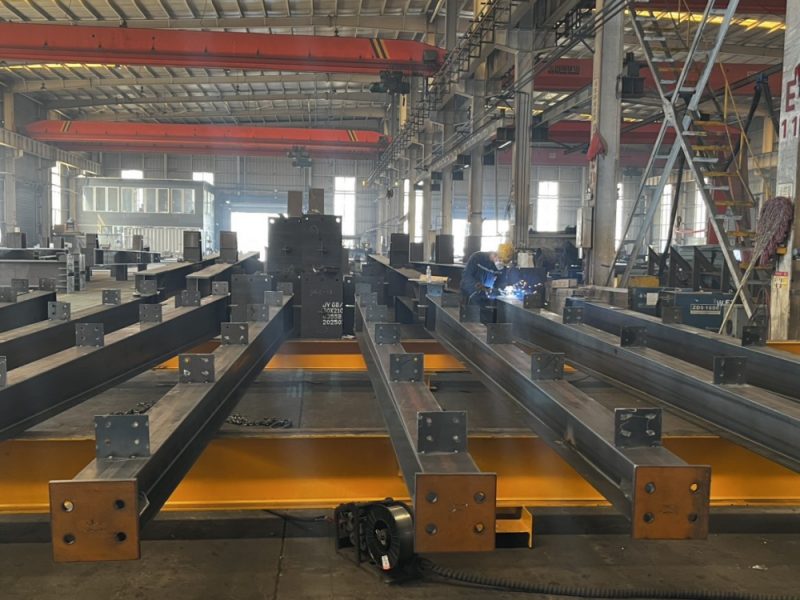
Steel structure fabrication typically involves steps such as plate cutting, assembly, welding, drilling, straightening, surface treatment, and final inspection. Production capacity is also crucial for large projects. For example, if a supplier has an annual capacity of only a few thousand tons but your project requires several thousand tons of steel, you should carefully verify production scheduling and delivery risks.
You can also ask if they can provide factory photos, production videos, quality inspection records, or arrangements for a site visit.
What truly matters is not the size of the factory, but whether its actual production capacity aligns with the scale of your project.
Examine the Supplier's Quality Control Process
The quality of steel structures is not determined solely at the final inspection stage; rather, it is established incrementally across multiple phases, including material procurement, fabrication, welding, and surface treatment.
A comprehensive quality control process typically begins with raw material inspection, followed by cutting, assembly, welding, dimensional checks, surface treatment, and final product inspection. For critical welds, non-destructive testing (NDT) may also be performed in accordance with project requirements.
The American Institute of Steel Construction (AISC) emphasizes the importance of quality systems during fabrication and erection, as well as the role of process control in minimizing errors and project risks.
You can ask the supplier specific questions such as:
How is steel inspected upon arrival? What procedures govern the welding process? Are critical welds tested? How are component dimensions verified? How is coating thickness measured?
These questions are far more valuable than simply asking, "Do you have quality control?"
If the supplier can provide material reports, welding inspection records, dimensional inspection reports, and coating test records, your assessment of production quality will be much more well-founded.
Check Certifications and Applicable Standards
Certifications provide insight into a supplier's management systems and production capabilities; however, possessing a certificate does not automatically guarantee superior project quality. Requirements for steel structure design, fabrication, and welding vary depending on the country, building type, and project scale.
Common Certifications for Steel Structure Suppliers
ISO 9001 is a common quality management system certification for steel structure companies, primarily used to evaluate whether a company has established standardized quality management processes. While it serves as a useful reference when selecting a supplier, it does not automatically ensure that specific steel components meet the technical requirements of a particular project.
For suppliers specializing in welded steel fabrication, ISO 3834 is another relevant standard to consider. This standard focuses on quality requirements for the fusion welding of metals, covering aspects such as welding procedures, personnel, equipment, and quality control.
For projects in the United States, verify whether the supplier holds the appropriate AISC Certification. AISC certification focuses on the quality management capabilities of structural steel fabricators and erectors and is a highly valuable benchmark for steel construction projects in the U.S.
For projects in Europe, relevant standards such as EN 1090 should be considered. Depending on the project's structural type and risk level, steel structure fabrication may need to meet specific Execution Classes, such as EXC1, EXC2, or EXC3.
Additionally, welder qualifications, Welding Procedure Specifications (WPS) and Procedure Qualification Records (PQR), Material Test Certificates (MTC), and project-specific non-destructive testing (NDT) records are crucial for evaluating fabrication quality.
Check Whether the Certifications Match Your Project
You do not need to require a supplier to hold every possible certification; instead, determine which standards actually apply based on the project location and building requirements.
For example, US projects require adherence to local building codes and standards such as AISC; European projects require compliance with EN standards; and projects in Australia and New Zealand may involve codes like the NCC and AS/NZS.
More importantly, verify whether the supplier can provide project-specific material certificates, welding records, quality inspection documents, and engineering data.
**Certifications are a reference point for evaluating a supplier, not the sole criterion.** A truly reliable assessment considers a combination of certifications, engineering capabilities, production quality, project experience, and actual quality records.
Review Previous Steel Structure Projects
Actual project experience is far more valuable than a generic claim of "20+ years of experience" on a supplier's website.
You can ask the supplier for case studies similar to your own project. For instance, if you are planning a large logistics warehouse, a supplier that has only built small agricultural structures will likely have a different level of expertise in handling technical challenges compared to one with a long track record of delivering large warehouses, factories, and logistics centers.
When comparing project experience, consider factors such as building area, structural span, steel tonnage, building usage, location, and local climatic conditions.
For example, if a supplier can demonstrate experience with:
10,000–50,000 sqm warehouses
30–60 m clear-span workshops
Heavy industrial buildings
Projects in high-wind or high-snow regions
...this information is far more useful than a simple claim of having "completed hundreds of projects."
If circumstances permit, you can also request project photos, specifications, client testimonials, or even contact details for past projects.
The value of experience with similar projects lies in its ability to reduce the risks associated with unforeseen challenges.
Compare Steel Structure Quotations Carefully
This is the stage where misjudgments are most likely to occur when selecting a supplier. Suppose you receive three quotations simultaneously:
Supplier | Quotation |
Supplier A | $500,000 |
Supplier B | $460,000 |
Supplier C | $420,000 |
At first glance, Supplier C appears to be the cheapest. However, if Supplier A’s quote includes insulated wall panels, doors and windows, engineering design, and packaging, while Supplier C’s quote covers only the primary steel structure, then these three figures cannot be directly compared.
You should first verify the scope of the quotation.
Does the quote include the primary steel structure? Are the roofing and wall systems included? Does it cover insulation, doors and windows, gutters, downpipes, ventilation equipment, and crane systems? Have engineering design, fabrication drawings, packaging, export documentation, and transportation been factored in?
The weight of the steel is also worth a careful comparison.
Consider the same building: one company quotes using 500 tons of steel, while another uses only 420 tons. You cannot simply assume that 420 tons is the more reasonable figure, nor that 500 tons represents waste.
Steel consumption depends on factors such as span, loads, structural system, material strength, and design standards. What truly matters is comparing whether the design conditions are consistent and whether the structural scheme meets project requirements.
What you should really be comparing is the "total project cost under identical technical specifications," rather than just the lowest figure on the quotation.
Evaluate Production Lead Time and Delivery Capability
Steel structure projects typically involve engineering design, drawing approval, material procurement, factory fabrication, quality inspection, packaging, and international shipping. Significant delays at any stage can disrupt the on-site construction schedule.
You should ask the supplier for a clear production schedule. For instance, determine the time required from contract confirmation to engineering design, the interval between drawing approval and the start of material procurement, the duration of production, and the time needed for final inspection and container loading.
For export projects, consider the mode of transport and container loading efficiency.
Steel components often need to be disassembled and packaged to fit transport dimensions. If a supplier lacks international export experience, issues may arise regarding container loading, packaging, shipping documentation, or handover at the destination port.
Therefore, delivery capability cannot be judged solely by a statement like "We can deliver in 30 days."
You should ask: "30 days from which stage to which stage?" A delivery deadline is only meaningful when the specific milestones are clearly defined.
Pay Attention to Communication and Project Management
Steel structure projects often span several months or longer, so communication skills directly impact project execution.
Before formalizing the partnership, observe whether the supplier understands your requirements and proactively raises technical questions.
For example, if you simply state, "I need a 5,000 sqm warehouse,"
an experienced supplier will typically ask for further details regarding building dimensions, intended use, span, eave height, location, wind and snow loads, insulation requirements, doors and windows, and crane specifications.
This type of communication is far more valuable than a simple price quote.
Once the project begins, you need to know who is responsible for engineering design, production follow-up, quality inspection, and logistics. A designated project manager helps minimize errors caused by information transfer between different departments.
Understand Installation and After-Sales Support
Clarify whether the steel structure supplier is responsible for on-site installation before signing the contract.
Some suppliers offer comprehensive installation services, while others handle only fabrication and shipping. There are also suppliers who provide construction drawings, installation manuals, and remote technical guidance but do not dispatch on-site installation teams.
These three models differ in terms of pricing and liability.
If you plan to use a local construction team for installation, confirm that the supplier can provide complete installation drawings, component numbering, connection details, and necessary technical guidance. When looking at after-sales terms, don't just focus on figures like "Warranty: 10 Years." You need to understand exactly what the warranty covers—whether it applies to the main structure, the coating, or other components—and who bears the costs for replacement, repair, and shipping should quality issues arise.
Watch for Red Flags When Choosing a Supplier
There are several situations that warrant special attention.
If a supplier’s quote is significantly lower than others but they cannot explain the price difference, you need to scrutinize the material specifications, steel weight, structural design, and the scope of the quote.
If the quotation lists only "Steel structure + roof + wall" without specifying materials, thicknesses, specifications, or the scope of inclusion, there is a higher risk of price adjustments later on.
Another red flag is a supplier's inability to provide verifiable project experience. A company that has genuinely executed large-scale steel structure projects should be able to present project documentation, rather than just citing a few vague project names.
It is also worth noting if the supplier frequently fails to respond promptly before the project begins, or if different sales representatives provide contradictory technical information.
These situations do not necessarily mean a supplier is unreliable, but they do indicate that you should conduct further verification before making payments or signing a contract.
Compare Multiple Steel Structure Suppliers Using the Same Criteria
If you are contacting 3–5 suppliers simultaneously, it is best not to simply compare their quotes side-by-side; instead, establish a unified set of comparison criteria.
For instance, you can create a comparison chart listing each company and evaluating them on factors such as engineering design, materials, manufacturing, quality control, project experience, scope of work, lead times, shipping, installation, and after-sales support.
While price is an important factor, it should not be the sole criterion.
You can view a supplier's overall capability as a combination of:
Engineering Capability + Material Quality + Manufacturing + Quality Control + Delivery + Support + Cost
This explains why, even if there is a 5%–10% difference in quotes between two suppliers, the ultimate value of the project can differ significantly.
For a steel structure project with a budget of hundreds of thousands of dollars or more, costs arising from subsequent changes, delays, or rework—often associated with lower initial quotes—can easily amount to a significant percentage of the contract value, quickly wiping out any initial savings.
Summary
Choosing a steel structure supplier is essentially a process of comparing project risks, engineering capabilities, and the value of the final deliverable. The most suitable steel structure supplier is not necessarily the one with the lowest quote; rather, it is a supplier that—given the specific conditions of your project—can simultaneously provide sound design, compliant materials, consistent manufacturing quality, transparent pricing, a reliable delivery schedule, and clear project support.
When you evaluate different companies using a consistent set of standards, selecting a supplier shifts from a mere comparison of price figures to a comprehensive assessment of engineering and project risks.