6 Industries That Benefit From Steel Structure Factory Buildings
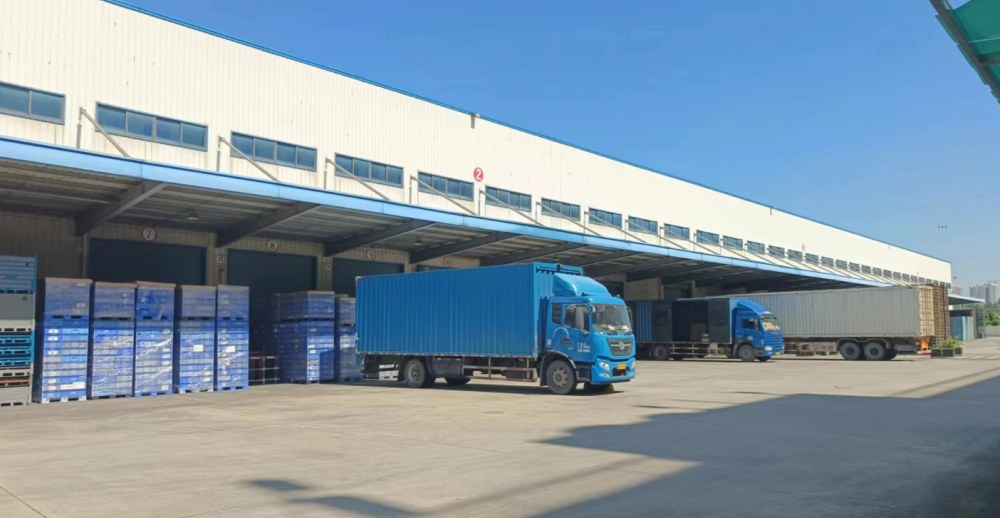
If you are planning a new factory project,the building itself is not the ultimate goal.What truly matters is that the project can go into production as soon as possible and continuously create value.
In the past,industrial factories mostly used reinforced concrete structures.However,with the upgrading of manufacturing,the rapid development of the logistics industry,and the increasing market competition,more and more companies are beginning to focus on construction cycles,space utilization,and future expansion capabilities.Compared with traditional building models,steel structure factory buildings are becoming an important choice for modern industrial buildings due to their advantages such as fast construction speed,large span,and strong scalability.
In actual projects,we often find an interesting phenomenon:many clients initially focus on the cost per square meter,but ultimately decide to use steel structures because of construction period,operational efficiency,and future development potential.For many industries,the value created by going into operation a few months earlier often far exceeds the cost difference of the building itself.
So,which industries are actually suitable for steel structure factory buildings?Why are more and more companies choosing it as their first option?Below,we analyze this in conjunction with actual application scenarios.
Why Are More and More Companies Choosing Steel Structure Factory Buildings?
If you're comparing steel-framed factory buildings with traditional concrete factory buildings,you'll quickly discover that the biggest difference isn't just the building materials.
For most industrial projects,time is often more important than the building itself.A factory building completed two months ahead of schedule means you can start production earlier,receive orders sooner,and achieve a faster return on investment.
Steel-framed factory buildings combine factory prefabrication with on-site installation.While foundation construction is underway,steel beams,columns,and enclosure systems are already being manufactured in the factory.Once the foundation is ready for installation,the main structure can be quickly hoisted in.
Compared to traditional concrete buildings,which require multiple stages such as rebar tying,formwork installation,concrete pouring,and curing,steel-framed projects significantly reduce on-site construction time.This is a key reason why more and more logistics centers,manufacturing plants,and warehousing projects are choosing steel structures.
What Are the Ddifferences Between Steel-Framed Factory Buildings VS Traditional Concrete Factory Buildings?
If you're planning an industrial building project,you're likely comparing the differences between steel and concrete structures.
While both can meet factory construction needs,from the perspectives of construction efficiency,space utilization,and long-term operation,steel structures are generally more suitable for the development needs of modern industrial projects.
Below are common comparisons:
Comparison Item Steel Structure Factory Concrete Factory
Construction Period Faster Longer
Building Weight Lighter Heavier
Foundation Requirements Relatively Lower Relatively Higher
Large-Span Space Easy to Achieve Column-Free Design Additional Columns Required for Large Spans
Expansion&Renovation More Convenient More Difficult
Seismic Performance Better Flexibility and Ductility Higher Rigidity
Material Recycling Value Higher Lower
If your project requires the installation of large equipment,automated production lines,or high-bay racking,then large span spaces are usually an important consideration.Steel structures can easily achieve column-free spaces of 30 to 60 meters or more,providing greater flexibility for equipment layout.
Furthermore,if you plan to expand production capacity in the future,steel structure factories usually offer more flexible expansion options.From a life-cycle perspective,this flexibility often helps reduce future renovation costs.
Which Industries Are Best Fit for Steel Structure Factories?
While steel structure buildings are suitable for most industrial projects,not all industries will reap the same benefits.
Based on actual project experience,the following six types of industries can typically better leverage the advantages of steel structure buildings.
Modern Warehousing and Third-Party Logistics
If you operate a logistics warehouse,distribution center,or cross-border e-commerce warehousing business,then warehouse space utilization is likely one of your primary concerns.
Modern warehousing increasingly relies on high-bay racking,automated sorting systems,AGV robots,and automated storage and retrieval systems(AS/RS).These systems require as much open internal space as possible to ensure operational efficiency.
Steel-structured factory buildings enable large-span,column-free designs,reducing internal obstructions.This not only improves the flexibility of racking layout but also helps forklifts and automated equipment operate more efficiently.
From a long-term operational perspective,a well-laid-out warehouse is often more valuable than simply reducing construction costs.Therefore,steel structures have become one of the most common building solutions for modern logistics warehousing projects.
Automotive Assembly and Heavy Equipment Repair Manufacturing
If your project involves automobile manufacturing,heavy equipment repair,or construction machinery services,you will likely require significant equipment installation space.
Engine lifting platforms,overhead cranes,large testing equipment,and automated assembly lines all place high demands on building spans and eaves heights.
Steel structure workshops can be pre-designed to accommodate crane beam systems based on equipment requirements and meet significant lifting loads.High headroom also provides ample space for future equipment upgrades.
This flexibility is crucial for automotive manufacturing plants,repair centers,and engineering vehicle service bases.
Heavy Equipment and Machinery Manufacturing
If your workshop requires the long-term operation of large equipment,the stability of the building structure directly impacts production efficiency and equipment safety.
Industries such as wind power equipment manufacturing,steel structure processing,engineering machinery production,and ship parts manufacturing frequently involve the hoisting of large components and heavy-duty transportation.
Steel structures inherently possess excellent toughness and ductility,effectively dispersing structural stress under vibration or impact.This is a significant advantage for large manufacturing workshops operating long-term.
Furthermore,large-span spaces offer more flexible layout options for large equipment and production lines.
Cross-border E-commerce and Light Industrial Processing
If you are involved in garment manufacturing,electronic assembly,plastic products,or home furnishing processing,market demands typically change rapidly.
You often want to complete factory construction and quickly commence production to respond promptly to order demands.
Steel structure factory buildings utilize standardized prefabrication methods,effectively shortening construction cycles.Many projects can be completed from design to main structure in just a few months.
If future orders increase or production capacity needs to be expanded,rapid expansion can be achieved by extending the building length or adding production areas,without requiring large-scale modifications to existing factory buildings.
High-end Food Processing and Pharmaceutical Cold Chain Industries
The food processing and pharmaceutical warehousing industries have stringent requirements for building environments.
Cleanliness,insulation performance,moisture resistance,and energy consumption levels directly impact operating costs and product quality.
Modern steel structure factory buildings typically employ insulation systems such as polyurethane sandwich panels and rock wool sandwich panels,creating a stable temperature-controlled environment.This is crucial for cold storage facilities,food processing workshops,and pharmaceutical warehousing centers.
Furthermore,the smooth surface of metal panels facilitates daily cleaning and maintenance,making it easier to meet the hygiene standards of relevant industries.
New Energy and High-Tech Industries
In recent years,the new energy industry has become one of the fastest-growing markets for steel structure buildings.
Whether it's a photovoltaic module factory,a lithium battery production base,or an energy storage equipment manufacturing center,all require large-scale production space and rapid construction capabilities.
Steel structure factory buildings not only meet the layout requirements of large production lines but also facilitate the installation of distributed photovoltaic systems on rooftops.Many projects incorporate photovoltaic load-bearing capacity during the design phase to reduce future retrofit costs.
Meanwhile,steel itself has high recycling value,aligning with green building and sustainable development principles.Therefore,an increasing number of new energy companies are prioritizing steel structures for new factory construction.
What Issues Should You Pay Attention to When Constructing a Steel Structure Factory Building?
Steel structure factory buildings can help shorten construction cycles,improve space utilization,and reserve more possibilities for future expansion.However,the successful implementation of a project still depends on the quality of initial planning and construction.
Many projects experience delays or subsequent maintenance problems not because of defects in the steel structure itself,but because of oversights in the design,foundation construction,or component manufacturing stages.Therefore,before officially starting a project,it is recommended that you focus on the following key issues.
1.Ensure Accurate Positioning of Foundation Embedded Components
Steel structures are prefabricated buildings,requiring high precision in foundation construction.
Especially the embedded anchor bolts upon which steel column installation relies;positional errors directly affect subsequent hoisting work.Therefore,multiple measurements and checks should be conducted before and after foundation pouring to ensure the embedded component positions meet design requirements.
For projects with large spans or requiring the installation of bridge cranes,foundation precision control is particularly crucial.
2.Understand Local Building Code Requirements in Advance
Design standards for industrial buildings vary across different countries and regions.
If your project is located in a coastal area,wind loads need to be considered;if located in a high-latitude region,snow loads need to be considered;and in seismically active areas,specialized seismic design is required.
Fully understanding local building codes during the project planning phase can effectively avoid repeated modifications during later approval and construction processes.
3.Choose Experienced Steel Structure Suppliers
Most of the quality of a steel structure factory building is actually determined at the factory stage.
Steel selection,welding processes,component precision,and surface treatment processes all affect the building's lifespan.Therefore,when selecting a supplier,it is recommended to focus on their project experience,quality management system,and practical cases,rather than just price.
4.Emphasize Corrosion and Fire Protection Design
If your project is located in a high-humidity,coastal area,or special industrial environment,corrosion protection design is particularly important.
Hot-dip galvanizing,epoxy zinc-rich primer,and multi-layer anti-corrosion systems can effectively improve the durability of steel structures.
Additionally,if the plant involves high-temperature equipment or has special fire protection requirements,appropriate fire protection systems should be configured according to local regulations.
5.Plan Ahead for Future Expansion
Many people only consider current needs when building a plant,neglecting future development potential.
In fact,one of the biggest advantages of steel structures is their flexibility for expansion.If you plan for expansion in advance during the design phase and reserve the necessary conditions,it will be much easier to add production lines or expand storage space in the future.
For growing companies,this forward-looking planning often saves significant costs on later modifications.
Conclusion
If you want to shorten the construction cycle,improve space utilization,and reserve more possibilities for future expansion,then steel structure plants are worth considering first.
From logistics warehousing to automobile manufacturing,from food processing to new energy plants,an increasing number of industries are leveraging steel structures to improve construction efficiency and operational capabilities.Compared to traditional concrete buildings,steel structures not only help you get up and running faster but also offer greater flexibility for future development.
Before starting a project,we recommend clarifying the following information:
Factory length,width,and height
Production purpose
Whether a bridge crane is needed
Construction location
Local building code requirements
Once this basic information is determined,structural engineers can provide you with more accurate design solutions and cost estimates.
As a company with extensive experience in industrial building projects,WZhbuild can provide you with a one-stop steel structure solution,from scheme design and manufacturing to installation guidance,based on the building codes of different countries and regions,helping your project to be implemented and put into operation faster.