Why Are More and More Investors Choosing Steel Structure Badminton Halls?
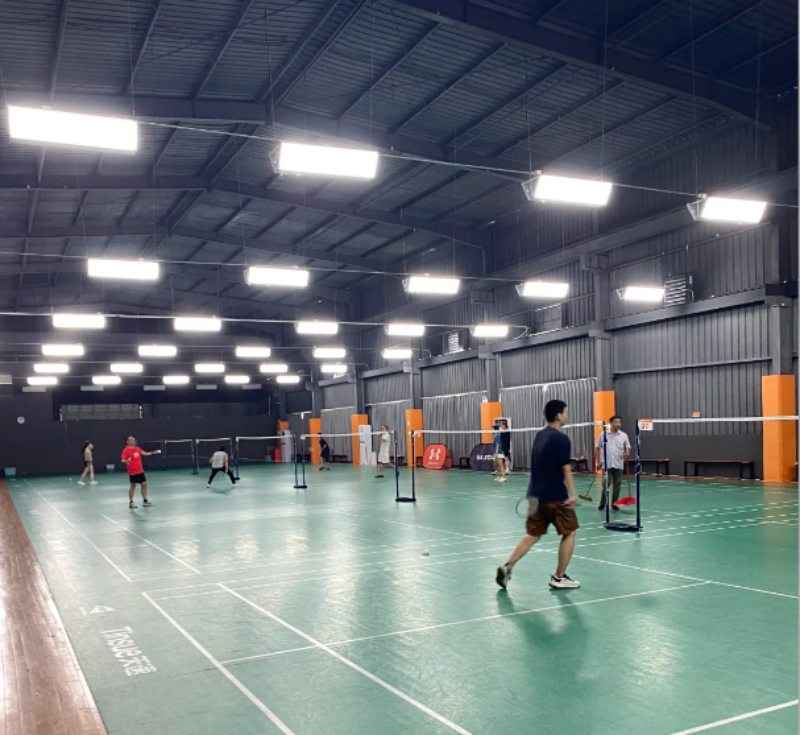
Simply put, the reasons center on five key aspects: more controllable construction costs, faster construction speeds, improved facility utilization through column-free, long-span spaces, lower long-term maintenance costs, and greater ease of future expansion.
Compared to traditional concrete buildings, steel-structure buildings can typically shorten construction timelines by approximately 30% to 50%. With a large number of components prefabricated in factories and higher on-site installation efficiency, facilities can begin operations sooner and generate cash flow earlier. Meanwhile, the long-span, column-free design allows for the layout of more standard badminton courts, boosting operational efficiency per unit of area; additionally, lower maintenance costs and flexible expansion capabilities further enhance the project's long-term investment value.
For investors, the advantages of steel-structure badminton halls lie not only in the building itself but also in cost control, operational efficiency, and profitability throughout the project's entire lifecycle.
Why Is Investing in Badminton Halls Becoming Increasingly Attractive?
In recent years, the global sports consumption market has continued to grow, and indoor sports facilities have increasingly become a key investment focus within the sports industry. Unlike outdoor sports facilities—which are heavily affected by weather and seasons—badminton halls offer year-round operation, longer business hours, and more stable revenue, attracting the attention of a growing number of investors.
Continuous growth in global demand for badminton
Badminton is one of the most popular ball sports in the world, with a global player base exceeding 300 million—over 70% of whom are in Asia. As public awareness regarding fitness and health rises, the demand for professional badminton halls from schools, sports clubs, and communities continues to grow, providing a stable market foundation for commercial facilities.
Year-round operation and improved facility utilization
Indoor badminton halls are virtually unaffected by the weather; most commercial venues can operate for over 350 days a year, with daily operating hours typically ranging from 14 to 16 hours. Evenings and weekends see the highest customer traffic, and established venues often achieve an average annual court utilization rate of 60% to 80%, with peak periods exceeding 90%. In contrast, outdoor sports facilities—constrained by weather and seasons—typically have an average annual utilization rate of only 30% to 50%, making them significantly less stable.
Diversified Operations Boost Profitability
Revenue for modern badminton venues extends beyond court rentals to encompass a range of services, including memberships, training courses, youth programs, tournaments, and the sale of sports equipment. Some venues incorporate amenities such as cafés and fitness areas to extend customer dwell time and increase spending, thereby generating more stable cash flow for the project.
Architectural Design Impacts Long-Term Investment Returns
While market demand determines the investment viability of a badminton venue, the architectural design dictates its future operational efficiency. Factors such as construction costs, timelines, operating expenses, and the potential for future expansion directly influence the return on investment. Consequently, an increasing number of investors are turning to steel-structure badminton venues—which offer faster construction, lower maintenance costs, and greater scalability—to lay a solid foundation for long-term operations.
Why Is Investing in Badminton Halls Becoming Increasingly Attractive?
As the sports industry evolves, investors are looking beyond mere construction costs to prioritize rapid operational launch and long-term profitability. Recent trends in sports facility construction show that steel structures are becoming the mainstream choice for badminton venues; their advantages extend from the construction phase through the entire operational lifecycle, delivering superior commercial value to investors.
Efficient Initial Investment Accelerates the Path to Profitability
For commercial projects, every expenditure during the construction phase impacts future financial returns. Unlike traditional concrete buildings, steel structures utilize a method involving factory prefabrication and on-site assembly—often achieving a prefabrication rate exceeding 80%. This approach minimizes material waste while reducing on-site construction and labor costs. Additionally, the lighter weight of steel structures places fewer demands on foundation work, making the overall budget easier to manage under comparable construction conditions.
Beyond cost advantages, construction efficiency is a key reason why investors favor steel structures. While traditional concrete badminton venues typically require 10 to 18 months to complete, steel-structure projects are generally ready for use within just 4 to 8 months—cutting the overall construction timeline by approximately 30% to 50%. A shorter construction period allows venues to launch membership drives, court rentals, and training programs sooner, generating stable cash flow earlier and accelerating the project's return on investment.
Enhanced long-term operational value boosts overall project returns
The commercial value of a badminton hall is not defined solely by its completion day; it depends heavily on operational performance over the coming decades. Steel structures enable large-span, column-free spaces exceeding 30 meters, allowing for a higher number of standard courts within the same building footprint. They simultaneously accommodate tournament hosting, training sessions, and diverse indoor sports, thereby maximizing facility utilization and operational efficiency.
Furthermore, modern steel structures typically employ protective treatments such as hot-dip galvanizing and anti-corrosion coatings, resulting in a primary structural lifespan of over 50 years. This ensures relatively simple maintenance and easier control of long-term operating costs.
As the business grows, the facility can flexibly expand to include additional courts, office areas, or commercial amenities without requiring major demolition or reconstruction. For long-term sports facility operations, this capacity for sustainable development often offers greater investment value than merely saving on initial construction costs.
How Do Steel-Structure Badminton Halls Help Investors Improve Return on Investment (ROI)?
For investors, the success of a badminton hall hinges not just on construction costs, but crucially on its ability to generate stable, ongoing cash flow. ROI is influenced by numerous factors, including facility utilization rates, operating costs, capital recovery speed, and future growth potential. The advantages of steel structures directly address these key factors throughout the project's entire lifecycle.
Boosting facility utilization to increase revenue
For commercial badminton halls, the courts themselves are the core revenue-generating assets. The large-span, column-free design of steel structures creates a seamless, expansive interior. This makes it easier to lay out standard courts within a given footprint and optimize the arrangement of spectator areas, lounges, and training zones, thereby maximizing overall space utilization.
Additionally, this spatial flexibility accommodates a wider range of operational scenarios. For instance, the facility can host training classes on weekday mornings, rent out courts in the evenings, and hold amateur tournaments or corporate team-building events on weekends. A facility capable of supporting diverse operational scenarios naturally achieves higher utilization rates, leading to more stable annual revenue.
Shortening the capital recovery period and improving capital turnover efficiency
A shorter construction period means the project begins generating profit sooner. Compared to traditional concrete structures, steel-structure projects can typically begin operations months earlier. This not only allows for the earlier generation of revenue from court rentals and memberships but also helps establish a customer base and build brand influence more quickly.
Consider a facility with eight standard badminton courts: with an average rental rate of 120 RMB per hour, 10 hours of daily operation, and a 65% court utilization rate, annual revenue from court rentals alone can exceed 2 million RMB. If the project opens four months ahead of schedule, it can generate over 700,000 RMB in additional early revenue. Furthermore, supplementary income streams—such as training courses and membership services—can be introduced sooner, accelerating the project's capital recovery.
Lowering Long-Term Operating Costs and Increasing Net Profit
For a badminton facility intended to operate for twenty or thirty years, long-term operating costs are often more critical than initial construction costs.
Modern steel structures typically incorporate thermal insulation systems, natural lighting, energy-efficient lighting, and ventilation designs. These features ensure indoor comfort while reducing energy consumption for lighting and air conditioning. Additionally, the main structure requires minimal maintenance and allows for quick repairs, further reducing ongoing upkeep expenses.
From an investment perspective, increasing revenue is just as important as reducing costs. As operating costs decrease while revenue grows steadily, the project's net profit and return on investment (ROI) naturally improve.
Steel-Structure vs. Concrete Badminton Facilities
While both steel structures and concrete are common construction methods for badminton facilities, they offer distinct advantages. Concrete construction is better suited for projects with specific requirements regarding building height or exterior aesthetics. In contrast, steel structures align more closely with the needs of commercial sports facilities, prioritizing construction efficiency, space utilization, and long-term operational viability.
Investors should look beyond mere construction costs and consider the impact of different building methods on the project's entire lifecycle—including construction timelines, operational efficiency, maintenance expenses, and the potential for future expansion.
Comparison Item | Steel-Structure Badminton Hall | Concrete Badminton Hall |
Construction Period | 4–8 months | 10–18 months |
Initial Investment | More predictable and easier to control | Generally higher |
Space Efficiency | Clear-span, column-free layout with greater flexibility | Layout restricted by columns |
Maintenance Cost | Lower maintenance over the building's lifecycle | Higher maintenance and repair costs |
Future Expansion | Easy to expand or modify | Expansion is more complex |
Investment Return (ROI) | Faster return on investment | Longer payback period |
It should be noted that there is no single "best" form of construction; the choice depends on the project's budget, venue scale, and operational goals. However, for badminton halls focused on commercial operation—where the aim is to enter the market quickly and generate stable revenue—steel structures often strike a superior balance between construction efficiency, operational flexibility, and long-term investment value.
From an investment perspective, the advantages of steel structures extend beyond the day of completion, manifesting continuously throughout decades of operation. Faster construction, higher space utilization, lower maintenance costs, and greater expandability collectively form the foundation for a higher return on investment.
How Do You Plan a Highly Profitable Steel-Structure Badminton Hall?
Even with a steel structure, poor initial planning can compromise profitability. For investors, the priority is not simply maximizing the building's footprint, but optimizing operational efficiency per unit of area.
Determining venue scale based on market demand
Many projects fall into the trap of thinking "bigger is better" during the initial stages. In reality, the venue's scale should be determined by local demographics, consumer purchasing power, and the competitive landscape. For most urban projects, planning for 6 to 10 standard badminton courts typically strikes an optimal balance between investment costs and operational efficiency.
Optimizing court layout and operational flow
A badminton hall's profitability depends not only on the number of courts but also heavily on the customer experience. A well-designed layout accounts for court spacing, spectator areas, changing rooms, rest areas, and training zones, preventing congestion during peak hours. Efficient operational flow boosts the venue's capacity and helps increase customer retention.
Prioritizing Energy Efficiency and Future Expansion
Lighting and air conditioning typically account for a significant portion of the operating costs for modern badminton halls. Incorporating natural lighting, thermal insulation systems, and high-efficiency lighting solutions during the design phase can effectively reduce long-term energy consumption. Furthermore, steel structures facilitate future expansion—such as adding more courts, fitness areas, or commercial spaces—by allowing for easier integration of new sections.
Is a Steel-Structure Badminton Hall a Worthwhile Investment?
Driven by market demand, construction efficiency, and long-term operational viability, steel-structure badminton halls are becoming a key area for investment in sports facilities. Compared to traditional buildings, they offer shorter construction timelines and reduced upfront capital requirements, while boosting long-term profitability through superior space utilization and lower maintenance costs.
For projects with an operational lifespan exceeding 10 years, the advantages of steel structures become increasingly apparent over time. Faster capital recovery, more stable cash flow, and flexible expansion capabilities often enable investors to achieve higher overall returns.
FAQs about Steel-Structure Badminton Hall
How much does it cost to build a steel-structure badminton hall?
Construction costs typically range from $180 to $350 per square meter, depending on factors such as the building span, local labor costs, material specifications, and ancillary facilities.
For instance, the total investment for a 1,000-square-meter steel-structure badminton hall generally falls between $180,000 and $350,000; however, adding features like spectator stands, air conditioning, advanced lighting, or specialized sports flooring will increase the total project cost accordingly.
How long does it take to build a steel-structure badminton hall?
The construction period is typically 4 to 8 months—30% to 50% faster than traditional concrete buildings—though the exact timeframe depends on the project scale and site conditions.
Are steel-structure badminton halls durable?
Yes, they are highly durable. With hot-dip galvanizing and anti-corrosion treatments, the main steel structure can last over 50 years under normal maintenance conditions.
Can a steel-structure badminton hall be expanded later?
Yes. Steel structures facilitate phased expansion; additional courts, office areas, or other facilities can be added based on operational needs with minimal disruption to ongoing business.
Which is more cost-effective: a steel-structure or a concrete badminton hall?
If priorities lie in construction speed, operational efficiency, and long-term return on investment, steel structures generally offer greater advantages; however, the specific solution should be selected based on a comprehensive assessment of the project budget and operational goals.
Can solar energy systems be installed on the roofs of steel-structure badminton halls?
Yes. Steel-structure roofs are typically suitable for photovoltaic (PV) installations, though professional design is required to account for roof load-bearing capacity and local building codes.
Conclusion
An increasing number of investors are choosing steel-structure badminton halls—not merely for their faster construction times, but because they strike a superior balance between construction costs, capital recovery speed, space utilization, operating expenses, and future scalability. For investors aiming for long-term facility management, a building capable of adapting to market shifts and continuously enhancing operational efficiency often holds greater commercial value than a solution driven solely by the lowest initial cost.
Current market trends indicate that the steel-structure badminton hall is more than just a construction choice; it is an investment strategy that integrates efficiency, flexibility, and long-term profitability.